
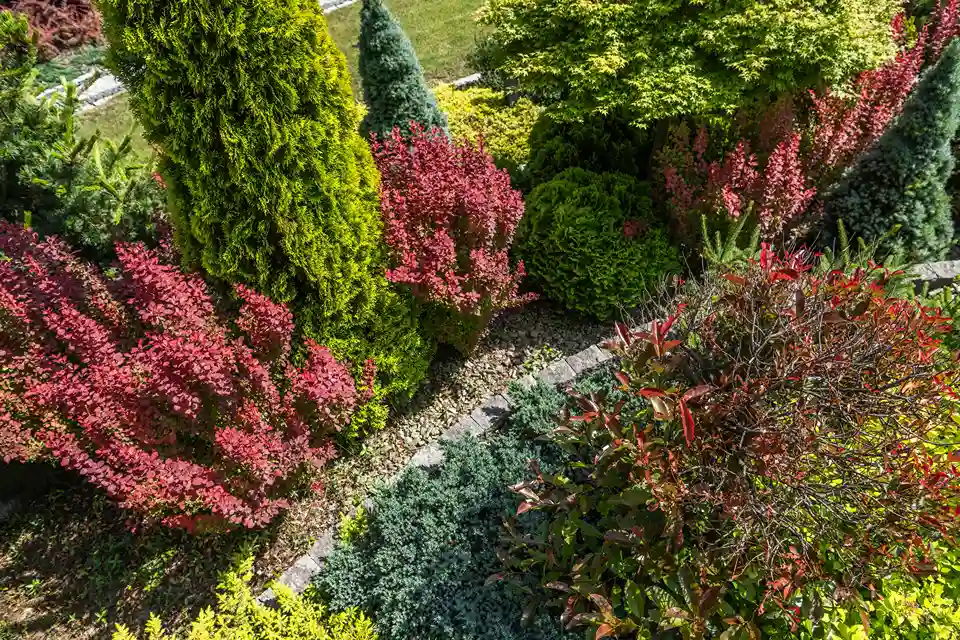
Evergreen shrubs are green little plants. They don’t care much about seasons the way flowers do. In Canada, winters can be long and harsh, but these shrubs stay green, giving gardens a bit of life even when snow covers everything else. Some of them have red leaves that pop in the fall, some bloom with yellow flowers in spring, and others keep growing quietly in shady corners. If you ever wondered what shrubs could make a yard look good all year, this is the place to find out. By the end of this guide, readers will have a bunch of options for their gardens, ideas for landscaping with shrubs, and tips on pruning and trimming without overthinking it.
Why Evergreen Shrubs Are Perfect for Canadian Gardens
Evergreens are like the quiet friends in your garden. They don’t demand attention every day, but they’re always there, standing tall through snow, rain, and wind. They help block cold winds in winter and create privacy screens so you don’t feel like your backyard is on display. Some of these shrubs bloom all summer, which is kind of like getting little surprises while walking past them. Red leaf bushes and shrubs add a splash of color when everything else looks gray or brown. Even in small yards, planting one or two can make a big difference.
Landscaping Advantages
Evergreens can be mixed with other plants for some fun effects. For example, pairing a shrub with yellow flowers with a darker evergreen gives the garden some contrast. People often forget that landscaping with shrubs isn’t just about filling space. It’s about movement and color throughout the year. If you have a patio, putting a row of small evergreens along the edge can make it feel cozy. And if you like containers, some shrubs work there too, bringing greenery up close so even small spaces don’t feel empty.
How to Choose the Right Evergreen Shrubs for Your Garden
Consider Your Canadian Hardiness Zone
Canada is big, and the winters are not all the same. Some places have mild winters, like Vancouver. Other places, like Alberta and Quebec, get very, very cold. If you know your hardiness zone, it gets easy to pick shrubs. You can choose the ones that can live there and grow well without problems. Zones range roughly from 3 to 9, and choosing shrubs in the right zone can save a lot of headache later. You don’t want to plant something beautiful, only to see it wilt in the first frost.
Sun and Shade Preferences
Shrubs are picky in their own way. Some love the sun and can handle hot summers, while others grow happily in shade. For example, Rhododendron does well in partial shade, while Blue Star Juniper likes full sun. Shrubs that grow in shade are perfect under taller trees or near buildings where sunlight is limited. Matching plants to their preferred light makes a big difference and keeps the garden looking alive.
Purpose and Space in Your Garden
Think about what you want from your shrubs. Are they for privacy, decoration, hedges, or just something to break up a boring patch of yard? Some shrubs stay small, perfect for containers or foundation planting. Others grow tall and wide, good for hedges or windbreaks. Knowing the type of evergreen shrubs in your garden helps you plan properly. No one wants a giant bush blocking the driveway by mistake.
Top 20 Evergreen Shrubs for Canadian Gardens
1. Boxwood (Buxus sempervirens)
Size & Growth Habit
Boxwood grows slowly, usually in tight, rounded shapes. It doesn’t get too tall, which makes it perfect for small gardens or container planting. You can trim it into neat shapes, and it usually holds up through Canadian winters without trouble.
Canadian Hardiness Zone
Zones 5 to 8. Boxwood can survive cold winters, but harsh winds can sometimes brown the leaves. A little burlap protection in severe frost helps.
Sun/Shade Requirement
Partial sun to full sun. Boxwood tolerates some shade but prefers a few hours of sun daily.
Best Uses
Ideal for hedges, borders, or accent points. Also works for topiary shapes if someone wants a bit of garden art.
2. Mountain Laurel (Kalmia latifolia)
Size & Growth Habit
Mountain Laurel is a slow-growing shrub with shiny green leaves. Its flowers bloom in late spring with pink or white clusters that smell sweet.
Canadian Hardiness Zone
Zones 4 to 8. Handles cold winters pretty well and doesn’t need fancy care.
Sun/Shade Requirement
Partial shade is best. Full sun can stress it in hotter areas.
Best Uses
Great as an accent shrub or in shady beds. It pairs nicely with rhododendrons or smaller evergreens.
3. Dwarf Alberta Spruce (Picea glauca ‘Conica’)
Size & Growth Habit
This one is a tiny evergreen cone that grows slowly, keeping a neat, formal look. It’s perfect when you need structure without taking over the yard.
Canadian Hardiness Zone
Zones 2 to 6. Very hardy for Canada’s cold winters.
Sun/Shade Requirement
Full sun is preferred. They get leggy if shaded too much.
Best Uses
Containers, patios, or little accents in front yards. Also good for winter interest because of its shape.
4. Juniper (Juniperus communis)
Size & Growth Habit
Junipers come in all sorts of shapes. Some trail along the ground, others grow upright. Needles can be bluish-green or grayish.
Canadian Hardiness Zone
Zones 2 to 7. Tough and can handle cold, dry winds well.
Sun/Shade Requirement
Full sun. It struggles in too much shade.
Best Uses
Ground cover, hedges, or foundation plantings. Drought-tolerant, which is nice for busy gardeners.
5. Canadian Hemlock (Tsuga canadensis)
Size & Growth Habit
Canadian Hemlock is soft-looking with delicate needles. It can grow quite tall, making it perfect for a privacy screen.
Canadian Hardiness Zone
Zones 3 to 7. Strong against cold and snow.
Sun/Shade Requirement
Partial shade is best. Full sun can stress young plants.
Best Uses
Hedges, windbreaks, or natural-looking borders. Great if you want a calm, shaded spot in your yard.
6. Rhododendron (Rhododendron spp.)
Size & Growth Habit
Broad, leafy shrubs that bloom in clusters of pink, purple, or white. Leaves are glossy and evergreen.
Canadian Hardiness Zone
Zones 4 to 8. Needs some winter protection in harsher zones.
Sun/Shade Requirement
Partial shade, ideally under taller trees.
Best Uses
Accent shrubs, shady gardens, or mixed borders. Can bloom all summer if chosen properly.
7. Yew (Taxus canadensis)
Size & Growth Habit
Slow-growing, dense shrub. Dark green needles, often used for formal hedges.
Canadian Hardiness Zone
Zones 3 to 7. Very tolerant of cold.
Sun/Shade Requirement
Full sun to partial shade. Can handle less light.
Best Uses
Formal hedges, privacy screens, or foundation plantings.
8. Holly (Ilex spp.)
Size & Growth Habit
Classic shrub with spiny leaves and bright red berries in winter. Looks festive naturally.
Canadian Hardiness Zone
Zones 4 to 7. Berries help birds in winter.
Sun/Shade Requirement
Full sun to partial shade.
Best Uses
Accent shrubs, winter color, and hedges. Pairs nicely with evergreens of contrasting color.
9. Inkberry (Ilex glabra)
Size & Growth Habit
Evergreen with glossy leaves and black berries. Grows upright but manageable in small yards.
Canadian Hardiness Zone
Zones 4 to 9. Tough and adaptable.
Sun/Shade Requirement
Full sun to partial shade.
Best Uses
Hedges, foundation plantings, or mixed borders. They work well in wet or dry soils.
10. Arborvitae (Thuja occidentalis)
Size & Growth Habit
Tall and narrow, perfect for tight spaces or privacy walls. Fast-growing varieties exist.
Canadian Hardiness Zone
Zones 3 to 7. Very cold-hardy and tough.
Sun/Shade Requirement
Full sun for best growth.
Best Uses
You can use it to get more privacy. It also helps stop strong wind. It stands tall and looks nice in the garden. Good for making a long line along the edge of your place.
11. Blue Star Juniper (Juniperus squamata)
Size & Growth Habit
This plant stays short. It grows close to the ground. The leaves look blue and a bit gray. It grows slowly and spreads little by little. Perfect for adding color contrast to gardens.
Canadian Hardiness Zone
Zones 4 to 8. Drought-tolerant once established.
Sun/Shade Requirement
Full sun. Needs bright light.
Best Uses
Ground cover, rock gardens, or accents near walkways.
12. Daphne (Daphne mezereum)
Size & Growth Habit
Small shrub, highly fragrant flowers in early spring. Grows slowly but looks elegant.
Canadian Hardiness Zone
Zones 4 to 7. Needs well-drained soil.
Sun/Shade Requirement
Partial shade. Too much sun can burn leaves.
Best Uses
Accent plant or small mixed border. Fragrance adds a garden “wow” factor.
13. Oregon Grape (Mahonia aquifolium)
Size & Growth Habit
Spiky leaves with yellow flowers in spring, followed by bluish berries.
Canadian Hardiness Zone
Zones 5 to 8. Very hardy for Canada.
Sun and Shade
This plant can grow in some shade or full sun.
Where to Plant
You can put it in a garden with shade, a place for birds and animals, or with other plants in a border.
14. Wintergreen (Gaultheria procumbens)
Size & Growth Habit
Low-growing ground cover with red berries in winter. Leaves are fragrant if crushed.
Canadian Hardiness Zone
Zones 3 to 8. Very tolerant of cold.
Sun/Shade Requirement
Partial shade. Can tolerate deep shade under trees.
Best Uses
Ground cover, rock gardens, or winter-interest corners.
15. Japanese Pieris (Pieris japonica)
Size & Growth Habit
Elegant, upright shrub with cascading flowers in spring. Leaves are often bronzy at first.
Canadian Hardiness Zone
Zones 5 to 8. Protect from extreme winds in winter.
Sun/Shade Requirement
Partial shade is ideal.
Best Uses
You can plant it to make the garden nice. It grows well in shade. You can put it with other plants too.
16. Labrador Tea (Rhododendron groenlandicum)
Size & Growth
This is a small bush. It stays low to the ground. Leaves are small. Flowers are white. They are hardy and easy to manage.
Canadian Hardiness Zone
They work well in Zones 2 to 6. Very tolerant of cold, wet soils.
Sun/Shade Requirement
Partial shade. Can tolerate acidic soil.
Where to Plant
Plant it in shady places. Good near water edges. Also good in natural garden areas.
17. Barberry Evergreen (Berberis julianae)
Size and Shape
It is a medium bush. The branches have small thorns. Yellow flowers grow in spring. Red berries follow in the fall.
Canadian Hardiness Zone
Zones 5 to 8. Needs some protection in severe frost.
Sun/Shade Requirement
Full sun to partial shade.
Where to Plant
Good for hedges. Can make garden borders. Nice for gardens with birds and small animals.
18. Korean Boxwood (Buxus sinica var. insularis)
Size and Shape
It is a thick, small bush. Works well for small hedges and garden edges. It is a slow-growing plant.
Canadian Hardiness Zone
Zones 5 to 8. Cold-tolerant and hardy.
Sun/Shade Requirement
Full sun to partial shade.
Best Uses
Hedges, borders, and formal gardens.
19. Hardy Rosemary (Rosmarinus officinalis, milder zones)
Size & Growth Habit
Evergreen with aromatic leaves. Can grow a few feet tall in milder zones.
Canadian Hardiness Zone
Zones 7 to 9 (milder areas). Protect in winter.
Sun/Shade Requirement
Full sun. Needs bright light to thrive.
Best Uses
Containers, herb gardens, or decorative planting in patios.
20. Sweet Box (Sarcococca hookeriana var. humilis)
Size & Growth Habit
Low, spreading shrub with fragrant winter blooms. Easy to grow.
Canadian Hardiness Zone
Zones 5 to 8. Tolerates cold winters if sheltered.
Sun/Shade Requirement
They are partial shade. Ideal under trees or along shaded paths.
Best Uses
Ground cover, borders, shade gardens, fragrance planting.
Evergreen Shrubs by Category
Sun-Loving Evergreens
Juniper and Arborvitae love sunlight. Plant them in open yards where they can stretch and grow strong. Perfect for hedges or just adding vertical interest.
Shade-Tolerant Evergreens
Rhododendron and Mountain Laurel do well under trees. They are not fussy but grow best in dappled light. Shrubs that grow in shade often look fuller and richer in color.
Low-Maintenance Evergreens
Boxwood and Yew require little fuss. Once planted, they mostly take care of themselves. Ideal for gardeners who want greenery without constant attention.
Drought-Tolerant Evergreens
Blue Star Juniper and Holly are shrubs that can survive dry times. These shrubs are forgiving if watering is skipped once in a while.
Evergreens for Privacy and Hedges
Canadian Hemlock and Arborvitae grow tall and dense. Perfect for blocking views, making quiet corners, or adding wind protection in open yards.
Conclusion
Evergreen shrubs are steady companions in any Canadian garden. From red leaf bushes and shrubs to shrubs that bloom all summer, there’s something for every yard, big or small. Whether for hedges, privacy, or just a splash of green in a snow-covered yard, choosing the right type of evergreen shrubs makes gardening less stressful and more enjoyable. Planning carefully with zones, sun, shade, and growth habits keeps things looking nice all year. For anyone unsure about what to plant or how to care for these shrubs, Harry’s Lawn Care can provide tips and hands-on help to make sure your garden thrives.
When to prune shrubs?
Most shrubs do well if pruned in late winter or early spring. Avoid pruning during hard frost. Light pruning through summer can shape plants without harming them.
When to trim shrubs?
Trimming is mostly about keeping shape. Boxwoods and Yew can be trimmed several times a year. Make sure clippings are clean to avoid disease.
How to prune a burning bush shrub?
Cut older branches near the base in early spring. This encourages new growth.
Can evergreen shrubs survive harsh Canadian winters?
Yes, but some need shelter or mulching. Dwarf Alberta Spruce and Canadian Hemlock are particularly hardy. Others, like Hardy Rosemary, need protection.
Which shrubs need the least maintenance in Canada?
Boxwood, Yew, and Juniper are easygoing. They don’t need frequent watering or special fertilizers. Great for busy homeowners.
Can evergreens grow in containers during Canadian winters?
Some can, especially if moved indoors or to sheltered spots. Dwarf varieties or small shrubs work best.
How fast do these shrubs grow in Canadian climates?
It varies. Junipers and Arborvitae can grow a foot a year, while Boxwood and Dwarf Alberta Spruce are much slower. Check each species’ growth rate before planting.