
Have you ever seen your concrete patio looking dirty even when it seems clean? Small stains, dirt, and moss can appear slowly. It can be a muddy footprint, a spilled drink, or leaves left too long. After some time, the patio can look old and messy.
Cleaning a patio is not hard. It does not take all day. With a few simple steps, anyone can make a patio look fresh again. This guide will help you clean your concrete patio. You will learn how to sweep and wash it, remove stains, take care of patio stones, and clean patio cushions easily. If you follow these tips, your patio can stay clean, nice, and ready to use all year.
5 Tricks to Clean Your Concrete Patio and Keep It Pristine
The following are the 5 tricks to clean your concrete patio and keep it pristine:
1. Sweep and Remove Loose Debris Regularly
Why Sweeping is Important
Before doing anything else, it’s worth remembering that a quick sweep every week can save a lot of hassle later. Dirt, leaves, and tiny bits of grass can pile up in corners and cracks. Left there, they can stain the concrete or even encourage moss and mildew. For example, one summer, a person skipped sweeping for a few weeks. By the time he saw the patio had a thin layer of grime and greenish streaks that were harder to clean. A small effort up front can prevent that.
Best Tools for Sweeping
A simple broom works wonders. Dustpans help for corners, and if you have a lot of space, a leaf blower can make the job fast. Stiff bristles are better than soft ones because they can lift dirt without scratching the concrete.
How Often to Sweep
It is good to sweep the patio once a week. After heavy rain, strong wind, or big parties, check and sweep again. A few extra minutes keep dirt from building up and save effort later.
Tips for Hard-to-Reach Areas
Corners, along walls, under furniture, and around planters often get missed. A hand broom or a small brush can get into these spots. Even little piles of dirt can turn into stains if ignored for months.
2. Master the Two-Phase Deep Clean
Why Standard Pressure Washing Isn’t Enough
Pressure washers are great, but they don’t always reach the tiny pores in concrete. Dirt, oil, and grime can hide deep inside, and a surface wash may leave them behind. That’s where a two-phase clean comes in.
Phase 1: Targeted Pre-Treatment
Different stains need different cleaners. Leaves and moss respond well to oxygen bleach. BBQ grease or oil is best with a degreaser. Rust marks from furniture? A commercial rust remover works best. Apply the cleaner, let it sit for 15–20 minutes, and keep it slightly damp by misting it. This gives the cleaner time to soak in and loosen the grime.
Phase 2: Scrub and Rinse
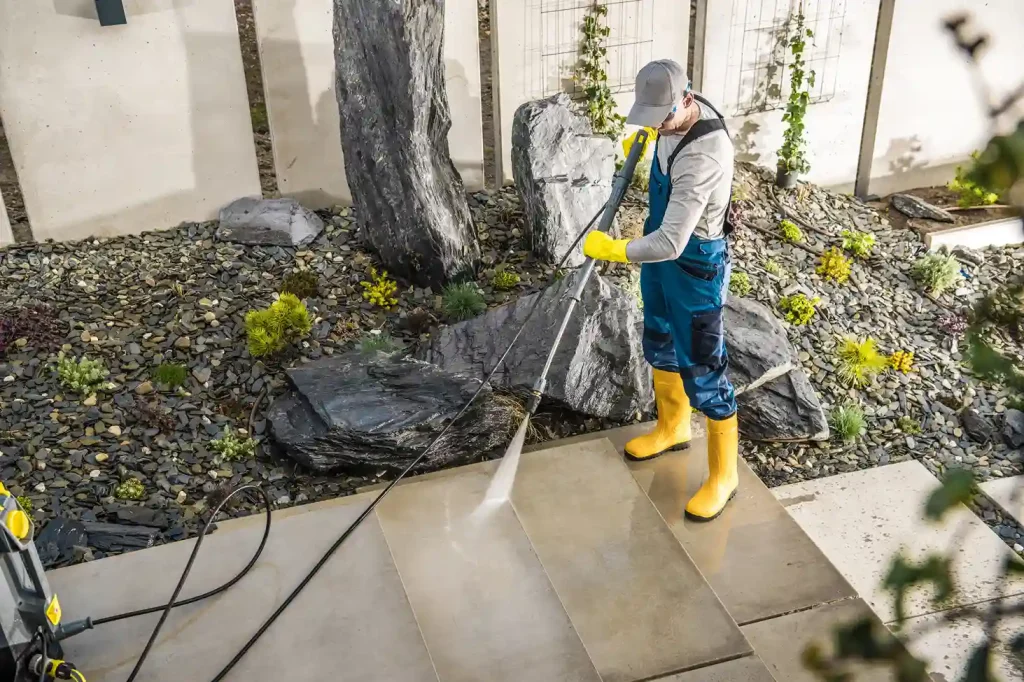
After you treat the patio, take a stiff brush and scrub the dirt. Then, use a pressure washer with 1500–2500 PSI to rinse it. This cleans the dirt but does not hurt the surface. It works well on concrete or cement patios and can make them look like new.
Safety Precautions
Always wear gloves and goggles. High-pressure water can splash unexpectedly, and some cleaners are harsh on the skin. Avoid focusing the pressure on cracks or old, weak spots in the concrete to prevent more damage.
3. Stain Removal Techniques
Identifying Common Patio Stains
Patios get all sorts of marks. Grease from the grill, rust from furniture, mildew from damp weather, and spills from drinks or food. Each type of stain needs a slightly different approach, and knowing what you’re dealing with helps a lot.
DIY Stain Removal
Baking soda and vinegar can remove the light stains effectively. Dish soap works on fresh grease or oil. For tougher marks, like set-in oil, a paste called a poultice can draw the stain out over a few hours. These solutions are gentle but quite effective, especially if you act early.
Instant Action for Spills
One common mistake is waiting too long. If juice, oil, or wine spills, blot it immediately. Don’t rub too hard, just lift it. Even old stains can be treated, but catching them fresh makes life easier.
How to Wash Patio Cushions
Cushions can be a separate headache. Most are removable. A simple mix of warm water and mild detergent works well. Scrub lightly with a soft brush and rinse thoroughly. Let them dry in the sun to prevent mildew. Knowing how to wash outdoor patio cushions correctly ensures they stay clean and last longer. Wash patio cushions regularly, especially after summer barbecues, to avoid permanent stains.
4. Seal Your Concrete Patio Regularly
Benefits of Sealing
Sealing adds an invisible layer that protects the patio from stains, moss, and the freeze-thaw cycles common in Canada. Moisture is the biggest enemy. When water seeps in and freezes, it can crack the concrete. A sealer keeps most of that moisture out.
The “Water Test”
Pour a little water on the patio. If it soaks in quickly, it’s time to reseal. If it beads on the surface, the sealer is still doing its job.
How to Apply Sealer
First, make sure your patio is clean and dry. Use a brush or roller to put the sealer on evenly. Do not let it puddle. Wait for the patio to dry fully before you walk on it or put chairs and table back.
How Often to Seal
In Canada, you should seal the patio every 2 or 3 years. If you wait too long, stains stay, and the patio can get weak. Sealer helps clean easily and keeps the patio looking nice.
5. Use Mild and Safe Cleaners
Why Not Strong Chemicals
Strong cleaners can break the concrete. They can also hurt plants or pets. Mild cleaners clean well and do not hurt anything.
Best Mild Cleaners
Soap, safe detergents, and vinegar with water work very well. They are safe for kids, pets, and patio stones.
How to Clean
Mix the cleaner with water first. Then use it to clean the patio. Scrub lightly and rinse everything well. Do not leave soap on the patio because it can attract more dirt. Even gentle cleaners, when rinsed poorly, can make the patio look dull.
Canadian Winter-Specific Tips
The following are the winter-specific tips for Canadian people to keep their concrete patio clean:
Climate-Safe Winter Traction
Ice is tricky on patios. Rock salt is tempting, but it eats away at concrete. Sand, kitty litter, or Calcium Magnesium Acetate (CMA) give traction without harming the surface or nearby plants.
Protecting Concrete from Freeze-Thaw Damage
Water and ice are relentless in winter. Keep the patio dry as much as possible. Clear snow carefully and reseal before the freeze-thaw cycle starts to prevent cracks. Regular checks are helpful. Even small cracks grow bigger if ignored.
Seasonal Patio Tips for Canada
Fall
Leaves fall on the patio. They can make stains. Sweep your patio every week. It keeps the patio clean and nice.
Winter
Take the snow off the patio carefully. Don’t use strong chemicals. They can damage concrete. Use sand or cat litter on ice to make it safe.
Spring
When it gets warmer, over 10°C (50°F), clean your patio well. Remove old salt, dirt, and grime from winter. Wash the concrete to make it fresh.
Summer
Hot sun makes the patio dry fast. Wash it to remove dust, pollen, or small spills. Check for cracks. Clean your cushions if needed.
Small Habits for a Clean Patio
Look for Problems
Check the patio for cracks, mold, or water issues. Fix small problems fast. They are easier to repair.
Clean Spills Fast
If you spill juice, oil, or wine, clean it right away. Fresh spills are easier to remove.
Conclusion
Keeping a concrete patio nice is not hard. You just have to sweep it to keep it clean. Clean it in two steps, remove stains quickly, seal it often, and use gentle cleaners, not strong ones. Watch the weather; it matters a lot in Canada. These tips from Harry’s Lawn Care help you have a clean and safe patio. With little work, your patio can look good all year. A small routine, some attention to spills, and the right cleaning habits make a noticeable difference over time.
Can I use a garden hose instead of a pressure washer?
Yes, you can. A garden hose works okay for small patios or light dirt. It does not clean deep stains well. But it is good for quick and easy cleaning.
How do I remove paint from a concrete patio?
Fresh paint can come off with warm, soapy water. Old paint is harder. You can use a brush and a mild concrete cleaner. Try a small spot first, to be safe.
Can I clean my patio when it is cold outside?
It is better to clean when it is warm. Water and soap do not work well in cold weather. Ice can make the patio slippery or crack it.
How often should I clean patio cushions?
Wash cushions after parties or when they get wet or dirty. Cleaning often stops stains and mildew.
Can weeds grow between patio stones, and how to stop them?
Yes, weeds grow there. Pull them by hand or use a brush. Pour hot water or a little vinegar on cracks to stop new weeds.
How do I stop moss or mildew on my patio?
Sweep leaves and dirt often. Do not let water stay on the patio. Wash sometimes with mild soap. Sunlight also helps stop moss.
Is sealing a new patio beneficial?
Yes. Sealing protects from stains, moss, and rain. Wait until the concrete is dry, about 28 days, before sealing.