
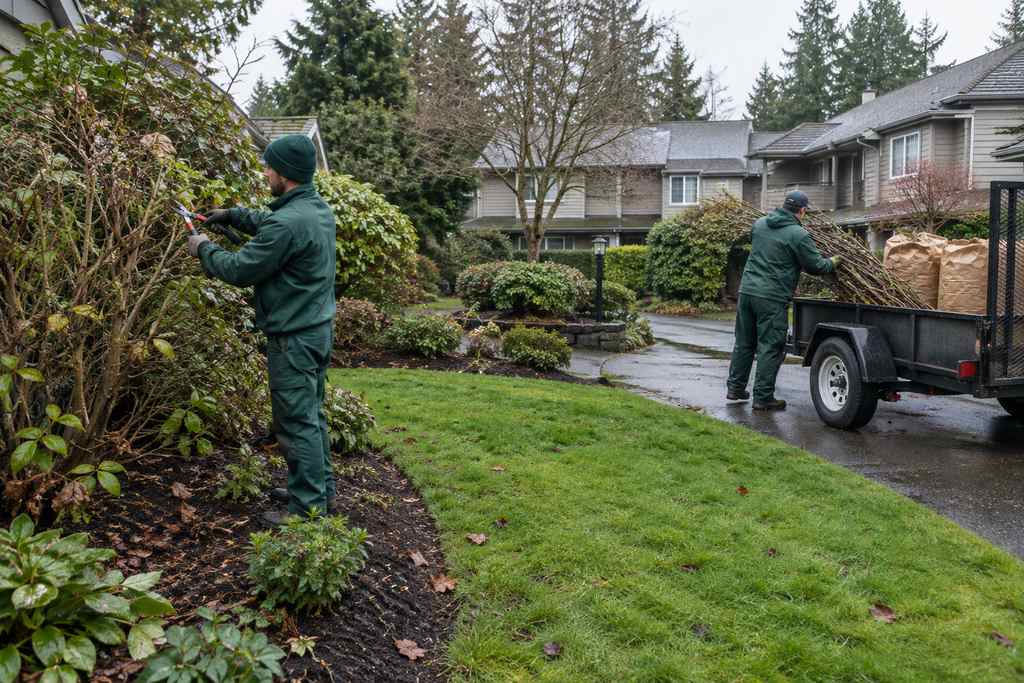
Winters on the Lower Mainland are lengthy and wet. By March, many lawns and garden beds are covered in soggy leaves, broken branches, and dead plants. Then a challenging question arises. What’s included in spring cleanup? Winter garbage removal, clean garden beds, cutting back dead plants, and basic yard waste disposal are typically included in spring cleanup. Request each in writing because haul-away, disposal, and pruning policies differ from company to company. Bird nesting regulations must also be followed when cutting in the Lower Mainland.
Many landowners discover the solution too late. A quote looks cheap. The employees finish the task. The bill has additional lines that no one has explained, and sacks of branches are left in the parking lot. This blog describes what’s included in spring cleanup. You will learn what the work covers, whether pruning and haul-away are included, what is extra, when to make a booking, and how to compare spring cleanup services provided by Lower Mainland teams.
What Is Covered in a Spring Cleanup?
So what does a spring cleanup include? There are four primary tasks: sweeping hard surfaces, tidying the lawn, cleaning beds, and removing debris. Each crew creates its list in a somewhat different way. Knowing what’s included in spring cleanup allows you to compare quotes properly.
Early Spring Lawn Care
A light rake is used to remove loose material from the lawn. A covering of dead grass that sits close to the ground is called thatch, and some crews also remove it. Typically, the initial mow waits until the ground is firm. Heavy machinery can leave deep ruts in the Lower Mainland’s spring soil, which is often soft after rain.
Removing Winter Debris
Twigs, fallen branches, and wet leaves sit on lawns, beds, patios, and walkways. Wet leaves press together, creating a thick mat. That mat inhibits light and water from reaching the grass below. Piles of old plant waste also attract bugs, so crews remove them early.
Cleaning Walkways and Building Entrances
Additionally, workers wash parking margins, pathways, and entrances. Some will make sure there are no leaves in window wells and downspouts. This is a brief glance. It’s not a complete gutter cleaning, which is often done separately.
Does Spring Cleanup Include Haul-Away and Yard Waste Removal?
Not always. It depends on the quote, because what’s included in spring cleanup often ends at bagging. Some crews include it. Others bag the waste, leave it for city pickup, and charge extra to take it away.
Curbside bagging or full haul-away
There are two common quote types. In the first, the crew bags the waste and leaves it for your city’s collection. In the second, the crew loads everything and drives it to a composting site. The second type is true yard cleanup haul away. It costs more because it adds labour, fuel, and a disposal fee. Check which one your quote means. City pickup has limits too. West Vancouver, for example, allows only six cans or bundles of yard trimmings per collection day. A large site can pass that limit fast.
What crews cannot haul, or quote separately?
Only plant material is covered by yard waste removal. The City of Vancouver does not accept soil, sod, plastic bags (including those labelled as compostable), invasive plants, concrete, brick, and rock in its yard waste drop-off. Hazardous garbage, treated wood, and construction debris are not included in the category of typical green waste. Prices for large branches, heavy loads, and difficult-to-reach locations are often determined by volume and access.
Where spring yard waste goes in Metro Vancouver
Metro Vancouver bans yard trimmings from the garbage. They have to go to a composting site or a green can. Branches up to 2.6 meters long and 25 centimetres thick are permitted at City of Vancouver facilities. Yard trimmings will cost $139 a tonne starting on July 1, 2026, with a $10 minimum per load. One more rule applies to business sites. The free resident drop-off program in New Westminster does not accept materials from garden care and landscaping companies. So a crew pays to dispose of your waste, and that cost belongs in your quote. That’s why yard waste removal should have its own line in the quote.
Does Spring Cleanup Include Pruning?
Usually yes, but only the light kind. What’s included in spring cleanup rarely stretches to big shaping jobs.
Light pruning most cleanups cover
Light pruning means removing dead or broken branches, trimming small shrubs, and clearing growth that blocks walkways and entrances. Winter storms in the region often snap branches, so this work is common in March. Anything high or heavy is tree work for a trained arborist.
Pruning that is quoted separately
Deep cuts on large trees, tall hedges, and special plants are usually quoted as their own item. The price depends on the plant’s condition and how easy it is to reach. Ask for this as a separate line, so nothing surprises you later.
Spring shrub pruning: what waits until after bloom
Timing matters more than most people think. Spring shrub pruning goes wrong when a crew cuts too early. Plants like forsythia, azalea, and rhododendron flower on last year’s growth, so they should be pruned after they bloom. If they are cut in early spring, the flower buds go with the branches. Summer bloomers such as spirea, roses, and panicle hydrangea flower on new growth. They handle pruning in late winter or early spring. A good crew asks which plants you have before cutting.
Pruning and bird nesting season
Spring is also the nesting season. In Canada, the nesting period can start as early as mid-March and last until late August. Some birds on the southern BC coast, such as the song sparrow, begin in February. Disturbing an active nest is against federal law and the BC Wildlife Act. Hedges and shrubs can hide nests deep inside. Strata councils and property managers should ask how a crew checks for nests before large hedge work.
What Costs Extra Beyond a Standard Spring Cleanup?
What’s included in spring cleanup sets the base price. Price then goes up with lot size, the number of beds, and the amount of debris and storm damage.
Mulch, topsoil, and bed edging
Fresh mulch, a topsoil top-up, and sharp new bed edges are usually add-ons. They work best after garden bed cleanup, because clean beds hold mulch better.
Moss control, aeration, fertilizing, and overseeding
Moss is a common problem on Lower Mainland lawns after wet winters. Shady, damp spots often grow the most. Aeration, fertilizing, overseeding and moss treatment are sometimes bundled in one package and sometimes priced alone.
Storm damage and overgrown sites
A wet winter can leave fallen limbs, debris piled against buildings, and soil washed out on slopes. Overgrown sites need more labour than a routine refresh. For these jobs, yard waste removal and yard cleanup haul away often take more than one trip.
When Should You Book Spring Cleanup in the Lower Mainland?
Wait until the grass has not yet started growing fast and the soil is no longer soggy. Starting too early can damage tender new plants and wet soil. That window is between March and April in much of the Lower Mainland. The timing of spring shrub pruning is important since nesting season starts in the same weeks. Make a booking in advance. Spring cleanup services Lower Mainland quickly fill up by the end of spring. Also, look into the spring programs in your community. For instance, New Westminster offers four weeks of extra curbside garden garbage collection in the spring and autumn. Knowing what’s included in spring cleanup before you book makes that first phone call much easier.
Is a Spring Cleanup Worth It?
In most cases, yes. Is a spring cleanup worth it for every property? Not always, but it pays off for most business sites and larger lots.
Healthier lawn and beds
Removing wet leaves and dead growth lets light and air reach the soil. Lawns and beds start the season stronger. Garden bed cleanup also helps you catch weeds while they are small and easy to pull.
Safer, cleaner commercial grounds
Loose debris can cause slips on walkways. Old plant piles attract pests. Tenants, customers and visitors get a first impression from the entrance. Tidy grounds help a property look cared for, and that matters for offices, shops and strata buildings.
Time and disposal savings
One crew visit replaces many trips to the dump. Each trip costs fuel, time, and a tipping fee. Doing it yourself can work on a small lot, if you have a clear plan for the waste. Look at what’s included in spring cleanup first, then decide. Large or heavily planted sites are usually better hired out.
How to Compare Spring Cleanup Services in the Lower Mainland
Compare what each quote covers, not only the price. When you look at spring cleanup services Lower Mainland crews offer, the lists can look the same and still hide big gaps.
What a clear written quote should list
A clear quote names each job: debris removal, garden bed cleanup, lawn tidy, pruning scope (including any spring shrub pruning), bagging or yard cleanup haul away, disposal fees, and any extras like mulch. It should say how the crew checks for nests. It should also come with proof of liability insurance. Then ask simple questions. What does a spring cleanup include on this quote? Does spring cleanup include haul-away here? Does spring cleanup include pruning, and how much? Clear answers tell you more than a low number does.
Why the lowest quote can cost more later
A low price often hides missing items. Haul-away may be left out. Pruning may stop at dead twigs. Extra lines then appear after the work is done. A local crew such as Harry’s Lawn Care lists each item before work starts, so owners know what they are paying for.
Conclusion
A spring cleanup clears winter debris, tidies beds, covers light pruning, and deals with yard waste. Is a spring cleanup worth it? For the majority of business sites, the answer is yes. The scope of work, haul-away, pruning timing with nesting rules, and a written quote are the four things to consider when comparing spring cleanup services offered by Lower Mainland providers. Once you know what’s included in spring cleanup, comparing spring cleanup services Lower Mainland providers offer becomes easier. Harry’s Lawn Care assists property owners throughout Metro Vancouver in planning spring work with clear quotes.
How much does a spring cleanup cost in Vancouver?
The price changes with what’s included in spring cleanup, such as the amount of waste, storm damage, lot size, and number of beds. Mulch, trimming, and haul-away also affect it. No one figure works for all sites. The crew must visit the property to obtain accurate pricing.
Should I wait to clean up so I do not harm bees and insects?
Helpful insects find refuge in dry stems and leaves. They can be harmed by cleaning too soon. Wait for steady warm weather.
Can I burn my yard waste instead of paying for disposal?
No, don’t do it without permission. Without Metro Vancouver’s permission, open burning is prohibited; a city burn permit is a different regulation. Green cans, drop-off locations, or yard cleanup haul away from a crew are simpler and safer for the majority of properties.
How long does a spring cleanup take?
The size of the site, the quantity of garbage, and what’s included in spring cleanup all affect how long it takes. With a small workforce, a modest property may take several hours. Storm-damaged yards or large commercial locations may require a whole day or longer. Request an estimate from the crew.
Does a spring cleanup include gutter cleaning?
Usually, what’s included in spring cleanup stops at a quick downspout check. Complete gutter cleaning is frequently an additional service with a cost of its own. Confirm this in the quote.