
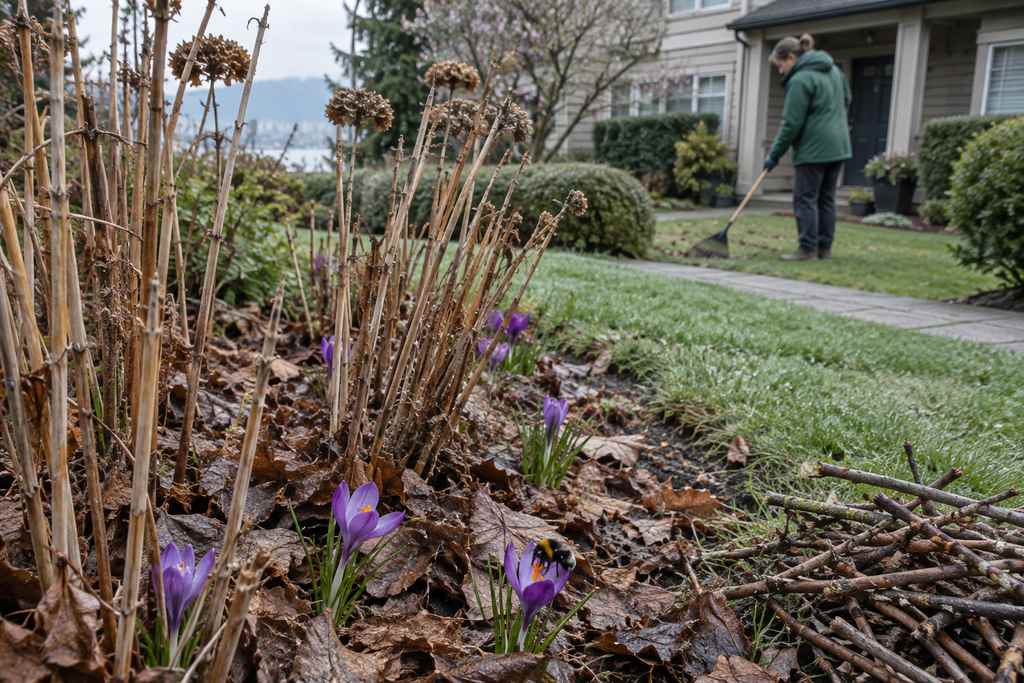
A Vancouver yard may look ready for work on the first warm day of March. The grass is green. The old stems feel dead. Picking up a rake seems right. However, tiny creatures are still sleeping beneath those brown leaves. A careful spring garden cleanup wildlife plan helps you deal with this condition. Wait until the snow and frost have gone and the evenings remain above 10°C for almost a week. First, clean the lawns and walkways. Give the old stems and leaves a few more weeks. This one habit can protect bees, butterflies, and other beneficial insects.
This guide explains when to clean up the garden for bees, what should be left alone, and which steps to follow. It also discusses garden waste regulations, ideas for commercial properties, and nesting seasons in British Columbia.
What Is Wildlife-Friendly Spring Garden Cleanup?
Cleaning in a slower order is known as wildlife-friendly cleanup. Allowing sleeping insects to awaken before disturbing their habitats is its goal. A spring garden cleanup wildlife plan treats leaves, stems, and dirt as shelter rather than waste. There are three hiding spots for overwintering insects in garden beds. Some sleep beneath leaves and in hollow stems. Others sleep in the soil. One yard may accommodate all three types of residences because lawns, hedges, and flower beds are frequently placed next to each other in Metro Vancouver. Insects known as pollinators move pollen from one flower to another. Leave the leaves where they fall until the weather warms up. For the tiny animals beneath them, they function as a blanket.
Why Does Early Spring Cleanup Harm Wildlife?
People can be fooled by a warm afternoon. But insects are not. The biggest mistake in spring garden cleanup wildlife is raking too early. Three groups of spring cleanup pollinators are harmed in this way.
Ground-nesting bees sleep under the leaves
The majority of native bees don’t live in hives; they live alone. Many are ground-nesting bees. They either sleep under mulch and leaves or dig little tunnels in bare ground. The tunnel doors can be sealed with a heavy layer of fresh mulch after raking removes the leaf cover. On damp BC coast nights, leaf cover also provides warmth.
Stem-nesting bees sleep inside old stems
About 30% of native bees build their nests above ground, in hollow stems and other small spaces. Their young develop inside the dead stems like sunflower stalks and raspberry canes of the previous year. These are the spring cleanup pollinators that are at risk. When the stem is cut and carried away, the next generation of bees goes with it.
Queen bumble bees, butterflies and beetles wake up late
During the winter, queen bumble bees sleep alone before establishing a new colony in the spring. A colony never starts if one queen is removed by a rake. Certain butterflies lay their eggs, caterpillars, or pupae under leaf litter throughout the winter. A few warm days don’t make them wake up more quickly.
When Is It Safe to Clean Up My Garden for Pollinators?
So, when is it safe to clean up my garden for pollinators? Temperature gives the first answer. Nature gives the second. A good spring garden cleanup wildlife schedule uses both.
Wait for warm evenings and no frost
What temperature to start garden cleanup is a common question. A week or more of evenings over 10°C without any remaining snow or frost is a fair rule. Just one warm afternoon is not enough. This stage is reached in late April or early May in several regions of Canada. Time varies per area. The Fraser Valley, the interior, and the coast all warm at different rates. On evenings, a garden by the river may reach 10°C earlier than one on a chilly slope. The best time to clean your garden for bees depends more on steady weather than on the date, so start by looking at your personal forecast for seven days.
Let early flowers feed the bees first
Violets, dandelions, and clover are spring cleanup pollinators’ first meals. If you can, postpone the first mow. When you mow, wait roughly two weeks between cuts and make sure the grass is at least 8 cm tall.
Wait until May for stem-nesting bees
Some bees spend more time inside stems than others. Small carpenter bees might not leave their stems until May in city gardens. Another hint is provided by flowers. The majority of native bees awaken as the pear and apple blossoms fade. 10°C should be viewed as a starting point rather than a guarantee. If you still ask when it is safe to clean up my garden for pollinators, wait until the weather and flowers are ready.
Should I Clean My Garden in Spring or Fall?
Why waiting until spring protects more wildlife
Many BC gardeners clean in fall, because November rain makes leaves heavy and messy. Yet a fall cleanup removes the winter shelter that overwintering insects in garden beds depend on. So, should I clean my garden in spring or fall? Choose spring for leaves and debris. Leave the leaves through winter and let them do their work.
How to Clean Up Step by Step Without Harming Wildlife
The date is just as important as a safe order. Once you know what temperature to start garden cleanup in your area, this spring garden cleanup wildlife routine helps you clean up your garden while protecting wildlife.
Start with paths, lawns and busy areas
Start where people are walking and staring. Clean the front lawn, sweep pathways, and make entrances clear. Back beds and secret spots should wait. Imagine a tiny strata garden. The front entrance area should be cleaned first, while the side strip along the fence should wait until late spring.
What to do with old plant stems in spring
What to do with old plant stems in spring is a common question. Keep them from being cut to the ground. If you want bees to build nests, cut them to a length of 20 to 60 cm, never less than 30 cm. To allow bees to use the cut parts, set them aside whole rather than chopped.
Keep the leaves, and move only matted ones
Leave the leaves to act as a natural mulch around plants. They provide food for the soil and cover for moths, beetles, and caterpillars. Don’t shred, burn, or bag all of the leaves; just move those that are in a thick mat on top of the new shoots.
Go easy on soil, digging and mulch
In Metro Vancouver, spring soil is often wet due to rainy months. Toads that are still underground might be harmed by spades, and damp soil is packed down by digging or edging. Give ground-nesting bees tiny areas of well-drained, bare soil. Because thick wood mulch can obstruct their tunnels, avoid those areas or spread it thinly.
Prune and weed with care
Before pruning, look closely at stems and branches. Cocoons and chrysalises may hang there and look like bits of dried leaf. Prune spring-blooming shrubs, such as flowering currant or lilac, only after they flower, because early blooms feed hungry bees. For weeds, use your hands instead of sprays. Chemicals can harm the insects you want to protect.
Stack cut debris in a quiet corner
Put cut stems and twigs in a loose pile in a quiet corner. Insects hidden inside can crawl out when ready, and birds may pick through the pile for nesting material. This pile is the simplest spring garden cleanup wildlife tool.
What Nesting Seasons and Local Rules Matter in BC?
Bees are not the only animals to think about. BC has clear rules for nesting birds and yard waste, and a good spring garden cleanup wildlife plan includes both.
Bird nesting season runs March to August
In many BC cities, the busiest bird nesting season runs from about March 1 to August 31. Active bird nests are protected by law in BC, and that includes nests inside hedges and shrubs. Check hedges before you cut. If you find a nest, leave that section alone until the young have left.
Where yard waste goes in Metro Vancouver
Yard trimmings cannot go in the regular garbage in Metro Vancouver. Leaves, stems, and small branches belong in a Green Can or yard trimmings container, or in a backyard compost. Bin limits and branch size rules differ by city, so check your own city’s page first. Strata and businesses should also ask their waste hauler how yard waste is picked up.
What to do when strata or neighbours want it tidy
Some neighbours may see leaf cover and standing stems as a mess. Keep the edges by the road and entrances neat, and leave natural zones at the back. A small sign that explains your spring garden cleanup wildlife approach can answer questions before people ask.
How Can Commercial Properties Balance a Tidy Look and Wildlife?
Customers expect a neat property, yet wildlife still needs time. A spring garden cleanup wildlife plan can serve both goals.
Keep entrances and signs neat
Visitors judge a business by its front door. Keep walkways, signs, and parking edges clear and trimmed. Neat edges show the property is cared for, even when the back beds stay natural.
Leave wild zones at the edges
Pick a few spots where wildlife can stay undisturbed, such as back strips, fence lines and the corners of large lawns. Leave stems, leaves and a small brush pile there. One quiet end of a long hedge can shelter overwintering insects in garden shrubs all spring, while the rest stays trimmed.
Follow a phased spring calendar
A planned calendar spreads the work over several weeks and settles when to clean up the garden for bees without delaying the whole site. Clean the front areas first. Wait for steady warm evenings before cutting stems. Do hedge and shrub work only after checking for nests. Harry’s Lawn Care plans spring work in this order for commercial properties in Vancouver, so crews follow the right sequence, and the site still looks good all season. This spring garden cleanup wildlife calendar keeps customers, tenants, and wildlife in mind.
Conclusion
A gentle spring garden cleanup wildlife plan costs less and is very beneficial. If you still ask what temperature to start garden cleanup, wait for evenings over 10°C. Choose spring for leaves and stems if you’re unsure whether to clean your garden in the spring or the autumn. In the spring, cut old plant stems to a height of at least 30 cm while leaving them intact. Commercial properties in Vancouver plan a wildlife-safe spring cleanup with the help of Harry’s Lawn Care. To schedule your spring cleanup plan, get in touch with the team.
Will leaves left on my lawn kill the grass?
Grass won’t be harmed by a thin layer of leaves. You can cover up to one-fifth of the lawn. Rake the excess lightly into flower beds because a dense coating can suffocate the grass and restrict light. Avoid stacking leaves on top of tree trunks.
Do I need a bird check before spring tree or hedge work?
A thorough inspection is wise because active nests are protected. In some BC cities, removing a tree during nesting season needs a bird survey by a qualified environmental professional before a permit is given. City-specific regulations vary.
When can I plant new native plants in spring?
Plant after your area’s latest frost date, which varies depending on the year and region. Instead of purchasing plants from the wild, use nurseries that focus on native flora.
What if my plants had disease or pests last year?
Plant portions that are diseased or infested should be removed and disposed of. Don’t include them in the stem pile. This is the only situation in which it is acceptable to remove the issue early because doing otherwise could cause it to spread.
Is it okay to prune raspberries or cut ornamental grasses in March or April?
In most cases, yes, but with one caution. These kinds of spring jobs are unlikely to cause major harm to pollinators. Bees may build their nests inside stems, so keep an eye out for little bees on cut canes. A good spring garden cleanup wildlife habit is to leave some tall stubble standing.