
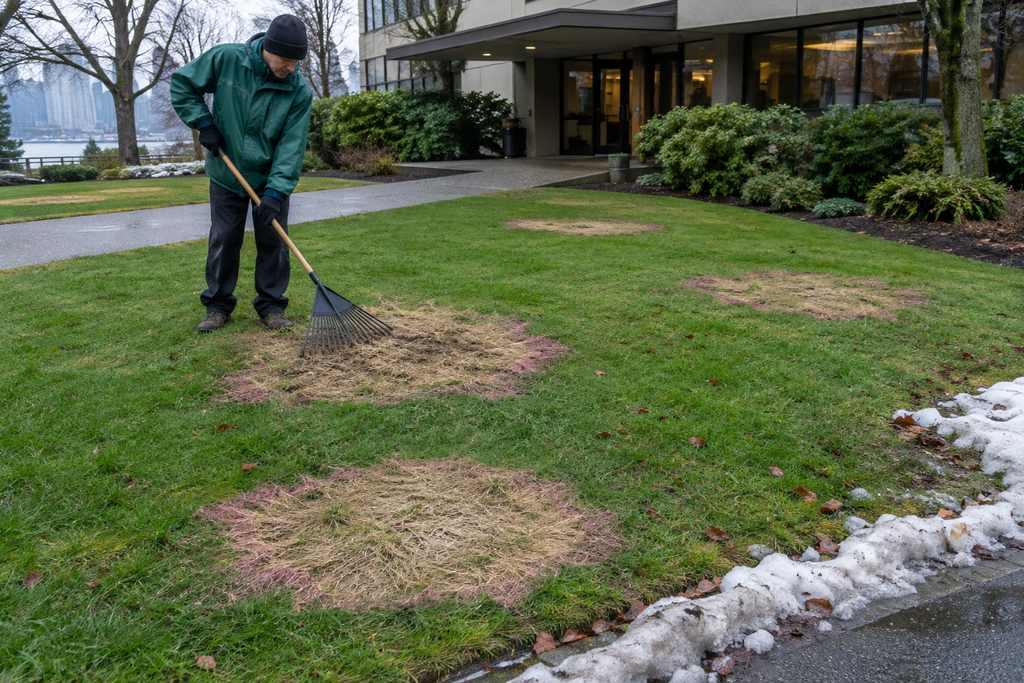
Many people in Vancouver think snow mould needs snow. It does not. A cool, wet winter is enough, and the Lower Mainland has plenty of such conditions. Winter lawn disease BC property owners face often appears in spring as dead, straw-coloured patches near a building entrance. To prevent snow mould, mow until the grass stops growing. Make the last cut about 5 to 6.5 cm (2 to 2.5 inches) tall. Clear leaves, fix wet spots, and skip heavy nitrogen late in the year. Save fungicide for areas that fail every year. This guide explains snow mould prevention and snow mould lawn treatment in simple steps.
What Is Snow Mould, and Why Does It Appear in Vancouver Without Snow?
Snow mould is a fungus. It attacks grass when the weather is cold, and the lawn stays wet for a long time. There are two main types. Pink snow mould is the most common winter lawn disease BC owners see. It grows in cool, wet weather with or without snow. Vancouver winters are mild but rainy, so those conditions last for months. Gray snow mould needs long snow cover, so it worries owners more in the colder parts of BC.
| Type | Weather | Snow needed? | Damage |
|---|---|---|---|
| Pink snow mould | Cool and wet | No | Can harm the crown and roots |
| Gray snow mould | Cold, with long snow cover | Yes | Usually harms leaf blades only |
The patches show up when the weather warms. They look tan or straw-coloured, and the grass feels flat and matted. A fungus lawn winter Vancouver problem often starts in the wettest, shadiest spots. Knowing the type helps you choose the right snow mould lawn treatment.
Why Are Commercial Properties at Higher Risk?
Commercial lawn disease control is harder than home lawn care. A lawn disease commercial property managers face usually has a pattern: large turf, tight crew schedules, and heavy use. Three site conditions make it worse.
Plowed Snow and Slush Piles
Snow is rare in Vancouver, so many sites have no plan for it. When a storm arrives, crews push snow onto the nearest grass strip. A big pile melts slowly and keeps the turf cold and wet for days. Before winter, pick storage spots on hard surfaces. Harry’s snow removal team can help plan them.
Leaf Build-Up Under Street Trees
Lower Mainland roads and parking lots often have trees beside them. Their leaves fall in October and November, just as the rain returns. Under wet leaf piles, fungus lawn winter Vancouver risks rise fast. University of Illinois Extension lists heavy leaf cover among the common causes of snow mould.
Shaded, Damp Spots Beside Buildings
Winter days here are short and cloudy. Grass on the north side of a building can stay wet long after the rain stops. These spots are often near entrances, where visitors notice patches first.
How Does Fall Mowing Prevent Snow Mould?
Tall grass folds over under rain and wet snow, and the damp mat feeds the fungus. Learning how to prevent snow mould starts with the mower. Mowing is the easiest step in snow mould prevention, and it costs far less than snow mould lawn treatment.
The Right Height for the Final Mow
For most lawns, the last cut should leave grass about 5 to 6.5 cm (2 to 2.5 inches) tall. Around 2 inches is a suitable height for the final mow. Lower the blade a little with each cut, because very short grass becomes weak.
When to Stop Mowing on the Lower Mainland
NC State Extension advises mowing until growth stops. Autumns here are mild, so grass can keep growing late into the year.
Clippings and Leaves After the Last Cut
Heavy clippings and thick leaf piles act like a wet blanket. A thin layer of chopped leaves can stay, but thick layers must go.
How Can Drainage Fixes Stop Winter Lawn Disease?
Vancouver gets heavy rain from October onward, and wet grass invites winter lawn disease BC sites cannot afford. Good drainage is the second part of winter turf disease prevention.
Walk the Site After Heavy Rain
Walk the property the day after a big rain. Look for puddles, soggy strips and areas still wet after 24 hours. Fix these first, because patches often appear there in spring.
Aeration and Thatch Removal
Thatch is a layer of dead stems and roots between the grass and the soil. When it is thicker than about 1.3 cm (½ inch), it can hold water near the surface. If it is too thick, dethatch or aerate in fall. Core aeration also opens packed soil so rain can soak in.
Regrading, Drains and Downspouts
Fill low spots so water runs off. Point downspouts away from turf. Clear grassy drainage channels, underground drainage pipes (French drains), and catch basins of leaves before the rainy season, because a blocked drain turns a lawn into a pond. Fixing drainage also reduces the need for snow mould lawn treatment later.
How Should You Handle Fall Fertilizer on Commercial Turf?
Heavy, fast-release nitrogen late in fall pushes soft, green growth just before the grass goes dormant. That tender growth is easy prey for the fungus. Use a balanced, slow-release winter formula instead. In the Lower Mainland the rains return in autumn, so plan the last feeding early. A fertilization schedule built for local weather supports winter turf disease prevention and lowers the need for snow mould lawn treatment.
When Is Snow Mould Lawn Treatment Worth It in BC?
A commercial property with a healthy lawn usually does not need fungicide every year. Fix the site first, because mowing, leaves, drainage and fertilizer timing do most of the work. Snow mould lawn treatment makes sense for areas that fail every year, or for high-visibility turf such as a main entrance. Timing matters. Fungicide works only when applied in late fall, before snow or a long wet spell. It cannot bring back grass that is already dead, so spring spraying will not fix last winter’s patches.
BC has rules for this work. Most pesticide use needs a certified applicator, and cities add their own limits. The City of Langley pesticide bylaw, for example, covers commercial property. Other Metro Vancouver cities differ, so check yours before any lawn disease treatment BC work begins. Harry’s Lawn Care follows five steps: inspection, a site plan, treatment where needed, advice on mowing, watering and drainage, and follow-up checks. The team has served Vancouver-area properties for over 15 years, from Richmond to Abbotsford.
How Do You Remove Snow Mould and Repair the Lawn in Spring?
Vancouver’s mild winters often allow grass to start growing earlier than in colder parts of Canada. This means lawn repairs can begin sooner in spring. These steps cover snow mould removal lawn repair in order:
- Wait for dry ground, then rake matted patches gently.
- Let sun and air dry the area.
- Mow as soon as growth starts, to remove damaged blades.
- Overseed bare patches once the soil is warm enough.
- Watch the same spots next fall.
If the same spots fail again, the cause is usually drainage or shade, not the grass. Careful snow mould removal lawn work completes snow mould lawn treatment for the year.
Conclusion
Vancouver has plenty of wet weather, so plan early. Mow until growth stops, keep the last cut near 5 to 6.5 cm, clear leaves, fix drainage, and feed lightly in fall. These steps are sound winter turf disease prevention. That is how to prevent snow mould before it starts. Good snow mould prevention is steady work, not a one-day job. Keep snow mould lawn treatment for repeat problem areas. Harry’s Lawn Care can inspect your property each fall and handle commercial lawn disease control and any lawn disease treatment BC sites need. Contact the team to book a site check before the rains start.
How Do You Know If Lawn Damage Is Caused by Snow Mould?
Snow mould leaves matted patches, often with a pink edge. Salt damage shows mostly along walkways, roads, and plowed piles. It harms plants. Chafer beetle damage differs because birds and raccoons dig up turf to eat the grubs.
What should we do if snow piles are already sitting on the lawn?
On a dry day, break up large piles and spread the snow thinly so it melts faster. In spring, rake any matted grass under the pile. This is simple snow mould removal lawn work.
Do we need a licensed applicator to use fungicide on a commercial property in BC?
In most cases, yes. Ask the company for its BC certification, the product name and the treatment date in writing. Lawn disease treatment BC rules also differ from one city to the next.
What decides the cost of snow mould lawn treatment and repair?
Area size, damage level, whether patches need overseeding or new sod, site access, and the number of visits. A site visit gives a real quote.
What should a lawn care contract say about snow mould?
It should name the final mow timing, leaf clearing, fall aeration, a drainage check and who handles spring repair. For any lawn disease commercial property owners manage, these terms keep commercial lawn disease control on schedule.