
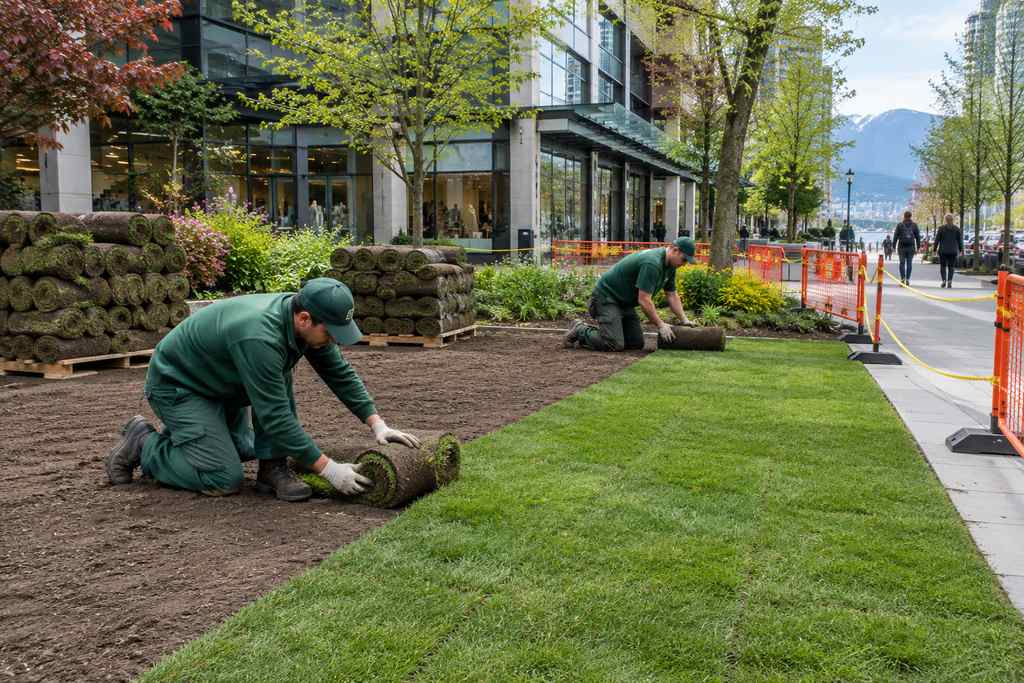
It takes more than just adding new grass to replace a damaged business lawn. Bare spots and more effort may result from poor planning, limited access, or missed watering. When planning commercial sod installation in Vancouver, timing is only one part of the job. Proper site preparation and a plan to minimize disruption for tenants and businesses matter just as much. This article will teach you how to prepare the site for new grass, what influences installation prices, when to schedule commercial sod installation Vancouver, and how to minimize interruption by scheduling the work around tenants and regular company activities.
When to Install Sod in BC Commercial Properties
Commercial turf installation timing is influenced by temperature, drainage, sod type, water access, and soil moisture. Projects involving commercial sod installation Vancouver should follow site conditions rather than just the schedule.
Spring and Fall Installation Considerations
When temperatures are moderate, and the soil is neither wet nor dry, spring and fall can provide favorable conditions. Unless dependable irrigation is provided, do not lay sod during periods of heavy rain or intense summer heat. Coordinate delivery with crew availability and site access. There is no single answer to the question “when to install sod BC.” An open commercial location may require a different plan than a shaded strata lawn. Ask the installer what weather or ground conditions might delay the work.
Summer Heat, Rain and Soil Conditions
It would be possible to install sod in the summer, but the soil and sod should remain wet as roots start to form. Additionally, heavy rain might cause delays in preparation and complicate the grading process. Before finalizing commercial sod installation in Vancouver, decide who will water the site and how foot traffic will be kept off the newly laid turf. The plan may be impacted by Metro Vancouver’s lawn watering limits during the restriction season. Also, check the property’s local regulations.
Preparing a Commercial Site for Lawn Replacement
Fresh sod can’t cover up underlying issues. An inspection of the soil, slope, shading, drainage, and foot traffic should be the first step in commercial sod installation in Vancouver. If the soil is compacted or water collects, new sod might not solve the issue.
Assessing Existing Lawn, Soil and Site Conditions
Inspect for empty spots, weeds, soil compaction, shaded areas, and water accumulation. Make a note of access points and delivery pathways. This defines the commercial lawn replacement scope and might indicate that only the damaged areas require repair. Maintain a brief written record of the existing condition of the site. Before digging or preparing the ground, contractors should submit a locate request through BC 1 Call to identify underground utility lines. Any privately owned irrigation pipes or other services may need to be located separately.
Removing Old Turf and Preparing Ground
Dead grass, weeds, roots, stones, and construction debris may need to be removed by the crew. Compacted soil may need loosening; only add dirt or amendments when the site requires them. Make sure sod sits firmly against the ground, remove any debris, and soften compacted soil. Prepare an even base for a new sod commercial property project. The search “new sod commercial property” cannot show how much work the ground needs; an on-site check can.
Checking Grading and Drainage
Water should not collect close to foundations or openings. After a rainstorm, check for puddles and wet ground. A clogged drain may need additional work. The quote should separate turf replacement from other repairs because a search for “landscape renovation Vancouver business” can involve more extensive site work.
How Commercial Sod Installation Works
The workers can install turf once the base is prepared. Fresh sod, tight seams, soil contact, and early aftercare are essential for successful commercial turf installation. Make plans for delivery and first-day watering prior to the crew’s arrival for commercial sod installation Vancouver.
Laying and Fitting New Sod
All pieces of Sod should be fitted closely. Don’t leave any gaps or elevated edges when working around trees, pathways, and landscaping beds. Rolling facilitates the turf’s contact with prepared soil. Maintaining roll freshness and minimizing post-delivery delays are also essential for consistent commercial turf installation.
Watering and Early Establishment
Soon after installation, fresh sod needs to be watered and kept moist while the roots establish a connection with the soil below. Weather, drainage, soil, and turf type all affect the schedule. Before installing sprinklers, test them to make sure every zone gets water; correct any sections that aren’t receiving it instead of waiting for rain to cover them. Clearly explain irrigation and access to the property manager. Check the property’s local regulations. Until the installer confirms that newly laid turf is ready for regular usage, keep people away.
How to Minimize Tenant and Business Disruption
Before commercial sod installation Vancouver, check tenant hours, deliveries, events, parking and busy entries. Let people know what is changing, and inform them if the weather changes the timetable. Use a single notice to provide work dates, access adjustments, and watering instructions so that renters, visitors and front-desk workers all receive the same information.
Schedule Work Around Business Operations
If the building’s schedule and local restrictions allow, it is better to fit noisy turf removal, machinery and deliveries in quieter hours. Weekends are not always the quietest. Let tenants know what will happen, where areas will be closed and when access is expected to be restored. Do not promise to reopen before the sod is ready.
Maintain Safe Access to Entrances and Walkways
Map out routes to entrances, accessible pathways, parking, loading spaces and emergency access. The work zone should be separated from pedestrians with signs and barriers. Temporary routes must be clear. The plan should include safe access points and properly identified pedestrian paths. BC’s work area safety requirements include all applicable workplace regulations.
Divide Large Sites into Work Zones
For a large property, do one zone at a time so that other zones can still be in use. Mark each portion open, under work or off-limits. Keep materials out of finished areas and plan watering so that people are not walking on new lawn. Let tenants know when each area may be ready to use again, depending on how well the new grass is growing.
What Affects Commercial Sod Installation Cost?
Searches for “sod installation cost commercial” brings up general estimates. The rate varies based on site and scope. Lawn size is important, but a tiny area with bad access or drainage may take more labor than a bigger, easy lawn.
Lawn Size and Ground Preparation
The quote may include turf removal, debris disposal, soil correction, grading or drainage work. A simple replacement differs from a lawn with compacted soil or persistent low spots. These jobs impact the price of commercial lawn replacement therefore the quote should indicate what is included and what could cost more.
Access, Irrigation and Additional Work
Restricted access, moving materials through a building, adjustments to irrigation and phased renovation can all add time to work. Ask for an itemized price for preparation, sod supply and installation, clean up, irrigation work and aftercare. Check whether disposal, topsoil, and irrigation adjustments are included, since these can change totals even when two quotes seem similar. The phrase “sod installation cost commercial” is only a starting point; scope matters more than a headline price.
How to Choose a Commercial Sod Installation Contractor
Select a contractor who understands the active commercial sites and can explain the work. Ask about preparation, cleanup, aftercare, insurance, and references. Search for a sod installation service BC that fits your project needs. If you’re considering a sod installer Surrey BC, confirm that they serve your property and check what their quote includes. Discuss how the contractor will handle weather delays and update tenants. Preparation, placing, cleanup, and early care should all be included in a commercial sod installation Vancouver quote. After discussing the project with Harry’s Lawn Care, confirm the scope and present service area of the business. If the property is close to Surrey, make sure your search for a sod installation in Surrey, BC, shows a company that serves both commercial sites and your location. Ask for written duties when looking for help through “landscape renovation Vancouver business’ search. Compare the options for “sod installation service BC” based on the work that is covered, not simply the cost.
Conclusion
A good result depends on timing, preparation, irrigation, cost details, and access. Before booking commercial sod installation Vancouver, confirm the work scope and aftercare. Contact Harry’s Lawn Care to discuss your commercial lawn renovation and request a quote. For anyone asking when to install sod BC, use site conditions and watering capacity instead of a fixed month.
What Type of Sod Is Best for a Commercial Property?
Sunlight, foot traffic, irrigation, soil, and available upkeep all affect the ideal sod. A high-traffic area or a shaded lawn could require a different kind of turf than an open lawn. Request the supplier to match the sod with the conditions of the site.
Can New Sod Be Installed if a Commercial Property’s Irrigation System Is Inadequate?
It may be possible, but watering needs to be solved first. Test water access and sprinkler coverage. If some regions are neglected or the system cannot give sufficient water, adjust it or prepare another reliable technique before installation.
What Should a Property Manager Do if New Sod Develops Dead Patches?
Examine foot traffic, sunlight, drainage, irrigation, and soil moisture. Don’t presume the sod was flawed because dead patches can have a variety of causes. Request the installer to evaluate the impacted areas and suggest any necessary repairs or maintenance adjustments.
Can Commercial Sod Installation Work Around Existing Trees and Landscape Beds?
Yes, most of the time, however the technique is impacted by roots, edging, shade, and access. During the site inspection, mark trees and beds and indicate which aspects require protection. To prevent harm to neighbouring plants or roots, the crew should carefully plan the edges.
How Can a Property Manager Decide Between Lawn Repairs and Full Replacement?
Extensive damage or persistent issues can require replacement, minor damaged portions might merely require patching. Determine the cause of the lawn’s failure first. Replacing all of the grass might not address drainage, compaction, or shading.