You know that feeling when your lawn looks fine one day, and the next day you notice some brown spots or soft patches? Turning your healthy lawn into a brownspot is challenging for people in Canada. A lot of people think it’s just the shortage of water supply to plants. But a lot of the time, the real problem is little bugs under the grass called lawn grubs. They eat the roots, and you don’t even see them at first. In this blog, you will learn what these grubs are and how to identify them in your yard. You will find easy ways to get rid of them.
What Are Lawn Grubs, and What Do Grubs Turn Into?
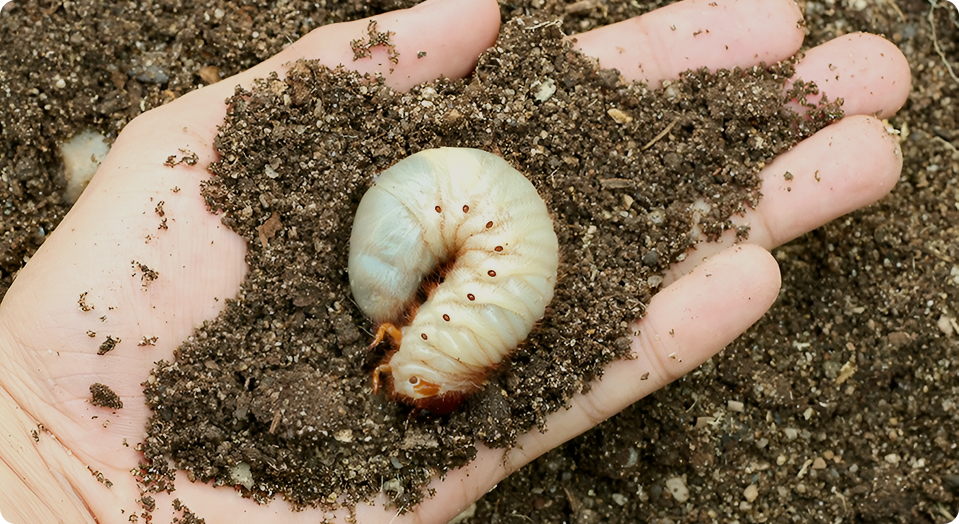
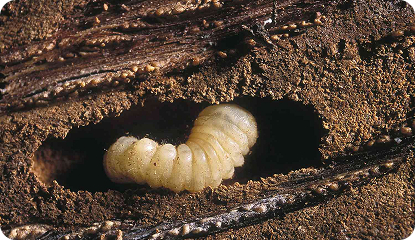
Lawn grubs are basically baby beetles. They look like little white C-shaped worms with brown heads, and they live right under your grass. They feed on the roots, which is why your lawn might suddenly feel spongy or lift up when you tug on it. When people talk about lawn care grubs, this is exactly what they mean: the root-chewing little creatures that can ruin months of work if left unchecked. They grow into beetles if they remain unchecked. Depending on the type, you might see Japanese beetles, June bugs, or other beetles flying around. That’s why they tend to come back year after year if you don’t catch them early.
How to Identify Grubs in Lawn and Yard Areas
Visible Signs of Grubs in Lawn
First, let’s talk about spotting the damage. If your lawn suddenly has irregular brown patches that feel spongy, that’s usually a red flag. The grass will often lift up like a loose carpet if you gently tug at it. You might walk across your yard and notice certain areas feel soft and bouncy, almost like stepping on a sponge. Late summer to early fall is the time when these signs show up most.
The Pull Test for Grubs in the Yard
A simple test is just to pull on the turf. If it lifts easily because the roots are gone, you likely have grubs. No need to dig yet, this little pull test can save a lot of time and guesswork. You can do this in several spots across the brown patches. Sometimes only a few areas are affected, and it gives you an idea of the scale before you start digging or treating.
Animal Activity as a Lawn Grub Warning
You might also notice animals digging around, like birds, skunks, raccoons, or moles. They’re basically showing up for a free buffet. If you’ve got a few skunks hopping around your yard, it’s worth checking for grubs. It’s not just your lawn suffering; they love to snack on those grubs in the lawn as much as we hate seeing them.
Physical Inspection to Confirm Lawn Grubs
Take a 1-square-foot area and go about two inches deep. Look for white, C-shaped larvae with brown heads. If you find more than five to ten grubs in that small area, it’s time to think about grub control. It’s way better to know what you’re dealing with than to spray blindly.
Best Time to Check for Lawn Grubs
Late summer to early fall is the time when grubs are near the surface, feeding. You can also spot them in early spring before they burrow deeper. Doing a quick check during these times helps you catch them before they do serious damage.
When Lawn Grubs Cause the Most Damage
Grubs have a feeding cycle that really matters. When they’re small, they eat quietly, but as they grow, they consume more roots. That’s why your lawn might look fine one week and suddenly be patchy the next. Watching the cycle can help you plan the right time for treatment instead of spraying chemicals randomly.
Why Timing Matters for Grub Control
If you wait too long, chemicals may not reach the grubs effectively. The smaller, younger grubs are easier to kill, which is why preventive measures work so much better. Late treatments often fail, leaving your lawn looking worse.
How to Get Rid of Grubs in Your Lawn
Preventive Grub Control (Best Long-Term Solution)
Preventive products work best when applied early, before the larvae start feeding. It’s like stopping a problem before it even begins.
Preventive Products
This gives your lawn a fighting chance. You won’t see the brown patches because the grubs never get a foothold.
- Chlorantraniliprole
A popular active ingredient in many preventive treatments. It targets grubs early and keeps them from eating the roots.
- Imidacloprid
It works well on newly hatched larvae and is common in home lawn treatments.
- Clothianidin
This one lasts a little longer, giving your lawn coverage through the season.
Curative Lawn Grub Killer for Active Infestations
If your lawn already has brown, lifted patches, curative treatments are the way to go. This is not preventive anymore; it’s more like putting out a fire.
Fast-Acting Lawn Grub Killer Options
Grubs are feeding near the surface, and chemicals can reach them. These kill the grubs quickly, so your lawn can start recovering.
- Dylox (Trichlorfon)
Works fast, which is helpful when you’re seeing real damage.
- Carbaryl
Another strong option for homeowners. Follow directions closely.
Don’t expect instant results. It may take a few days for the lawn to stop deteriorating, and careful application is key.
Biological Grub Control Options
Beneficial Nematodes (Heterorhabditis bacteriophora)
These are tiny worms that naturally attack grubs. They’re a little like natural predators underground. Perfect for households with kids or pets. Nematodes work best in moist soil when grubs are near the surface. Timing and moisture make this process effective.
Natural Ways to Remove Grubs from Lawn
The following are the natural ways to remove grubs from your lawn
Milky Spore for Japanese Beetle Grubs (Long-Term Control)
This bacterial treatment takes a while, sometimes a few years, but it slowly builds a natural defense against certain beetle grubs.
Manual Removal for Small Infestations
For tiny patches, just dig up the affected areas. Birds can help too; they love eating grubs, which is nature’s bonus.
Dish Soap Solution to Flush Grubs to the Surface
Mix a little dish soap with water and pour over the soil. The grubs wriggle up, and you can remove them. It’s simple, a little messy, but effective.
Preventing Grubs From Returning to Your Lawn
Proper Watering
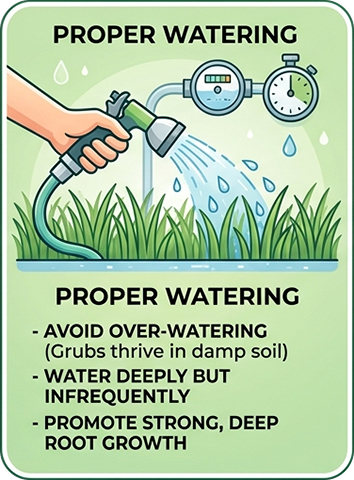
Shallow, frequent watering is a grub magnet. Instead, water deeply and less often. Your roots grow stronger, and grubs don’t find it as tasty.
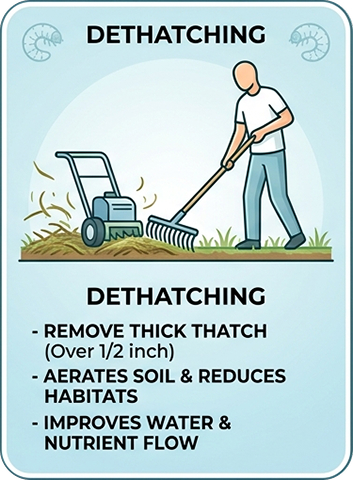
Dethatching
Thatch is basically a cozy nursery for beetles to lay eggs. Pull it out regularly, and you’re making your lawn less appealing for future grubs.
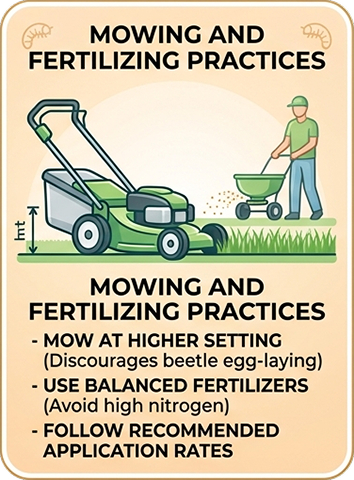
Mowing and Fertilizing Practices
Keep your grass taller, around three inches or more. Taller grass has deeper roots, which survive grub nibbling better. Don’t over-fertilize either; it just makes your lawn more attractive to pests.
DIY Grub Control vs. Professional Lawn Treatment
When DIY Grub Control Is Enough
Small infestations, early detection, and correct timing often let you handle the problem yourself. A little patience and following instructions carefully usually work.
When to Consider Professional Help
If the damage is big, keeps coming back, or you’re not sure what’s causing the problem, calling a professional is wise. This is especially true in certain areas, like the Grubs on Main in Vancouver, where repeated beetle activity can be tricky to manage.
Conclusion
Dealing with lawn grubs can feel annoying, but it doesn’t have to be too hard. With a little attention and care, you can get your grass healthy again and keep it safe from these root-eating pests. In Canada, professionals at Harry’s Lawn Care help people with grub prevention at the residential and commercial levels.
How do I know if I have grubs in my lawn?
Look at the grass closely. If some areas turn brown and feel soft when you walk, that is a sign. Pull the grass gently. If it comes up easily, check the soil. Seeing small white C-shaped bugs means grubs are there.
When is the best time to treat lawn grubs?
Early summer is best for prevention. This is when young grubs start growing. If the lawn already looks damaged, treat it in late summer or early fall. Treating at the wrong time usually does not work well.