

Gardening can feel a bit overwhelming sometimes. There are seeds to plant, soil to prepare, weeds to battle, and the sun seems to have its own schedule. Mulching is one of those things that seems small, but it really changes the game. It’s not just about making your garden look neat. Mulch does a lot quietly, like keeping soil happy and plants healthy, without you having to do too much. If you’ve never mulched before, it’s worth giving it a try. In this blog, you will learn what mulch is, its types, benefits, and the best method to apply mulch in your garden.
Want a Healthier Garden Without Extra Effort?
Discover how professional mulching can save time and boost plant growth.
What Is Mulch and Why Does It Matter
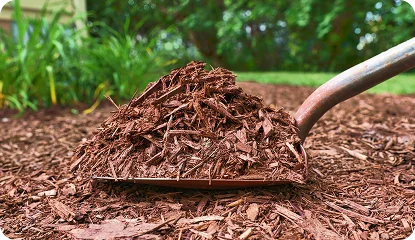
Mulch is basically any material you spread over the soil around plants. It could be wood chips, leaves, straw, or even stones. Its main job is to cover the soil, and that simple act brings a lot of benefits. A good layer of mulch helps soil hold water longer, so you don’t have to water frequently. It keeps weeds from popping up everywhere.
In hot weather, it helps cool the soil and also protects the plant roots from freezing in winter. Organic mulch also feeds the soil after it breaks down into useful components. It’s like a slow-release snack for plants. Whether you have a tiny balcony garden or a big lawn, you can get benefits from mulching.
Benefits of Mulching Your Garden
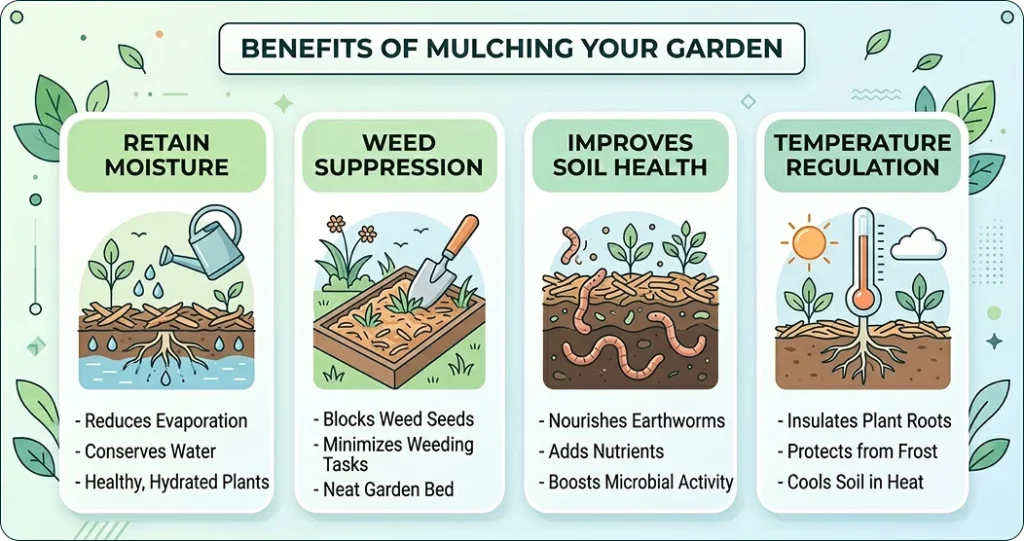
The following are the benefits of mulching your garden:
- Retain Moisture
- Weed Suppression
- Improves Soil Health
- Temperature Regulation
Let’s discuss each benefit in detail for better understanding.
Retain Moisture
Mulching retains the soil moisture. It helps plants to survive in harsh summer weather. Dry soil can affect plant growth. Mulch helps water stay in the soil longer by reducing the rate of evaporation. When soil remains moist in hot weather, plants fulfill their water needs easily. Mulch is beneficial in area having dry weather conditions. Even a small amount of mulch can create a big difference in your lawn. It also facilitates you to water less frequently with a busy schedule.
Weed Suppression
Weeds are sneaky. They pop up, steal nutrients, and sometimes just look messy. Mulch works like a blanket for the soil. By blocking sunlight, it stops many weed seeds from germinating. A small amount of mulch is enough to prevent weeds from lawn. It saves your time, and you can enjoy it more.
Improves Soil Health
Mulch improves soil health as it provides nutrients to the soil. Organic mulch, like leaves, compost, and grass, acts as a natural fertilizer for your garden. It encourages tiny useful microbes that help plants take up nutrients and prevent them from different diseases.
Temperature Regulation
Extreme temperatures can stress plants. Mulch acts as a cozy blanket in winter and a shield in summer. Roots stay warmer when it’s cold and cooler when the sun is blazing. That protection can make the difference between a plant thriving or struggling.
Enjoy All These Benefits—Without the Hard Work
We handle mulching so you can enjoy a healthier, cleaner garden.
Types of Mulch
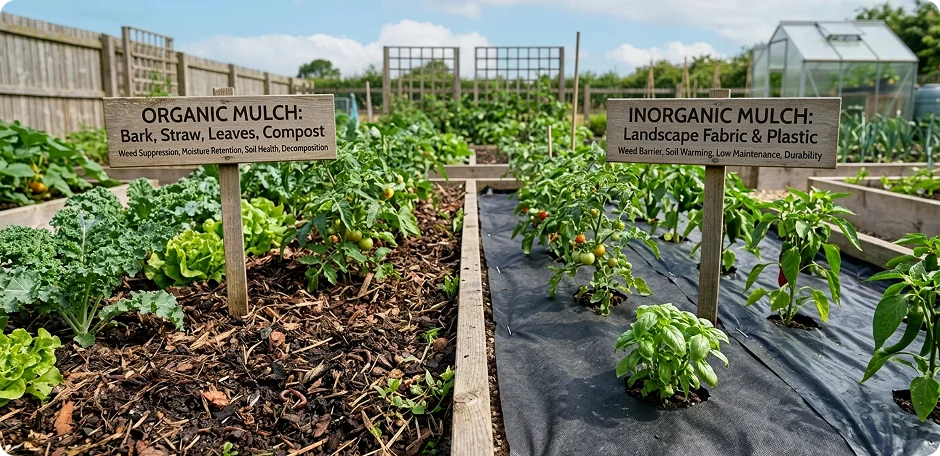
Mulches generally fall into two main categories: organic and inorganic. Each has its own advantages and a few disadvantages.
Organic Mulch
Bark and Wood Chips
This kind of mulch offers weed suppression, temperature regulation, and moisture retention of the soil. Bark and wood ships give a fine texture and decorative look to your lawn.
Straw and Hay
It is perfect for vegetable gardens. Straws are light in weight, regulate water, and eventually add organic matter to the soil. Hay is also beneficial for the lawn, but be careful, sometimes hay may contain weed seeds.
Grass Clippings
If you mow your lawn, you must add grass clippings to it. They add nitrogen to the soil and are free. Just make sure they’re dry first; wet clippings can mat down and give smell.
Leaves
You can get fallen leaves everywhere in the fall, and they make great mulch for flower beds. Shredded leaves work best for plants; they slowly break down into nutrients and improve soil texture.
Compost
It covers soil, keeps moisture in, and feeds plants with nutrients at the same time. It helps to improve plant growth and keep soil moist in warm weather.
Inorganic Mulch
Gravel and Stones
They are durable, require low-maintenance, good for paths in the lawn, driveways, and decorative areas. They won’t enrich the soil, but they last forever and give a tidy look to the garden.
Landscape Fabric / Plastic Mulch
This mulch usually block weeds growth really well and keeps water in the soil by lowing evaporation rate. They are often used in vegetable gardens and in areas where you want minimal maintenance.
Rubber Mulch
This mulch is made from recycled tires. They are long-lasting and work well in playgrounds and decorative spaces.
Choose the Perfect Mulch for Your Garden
We help you pick and apply the best option for lasting results.
How to Mulch Your Garden
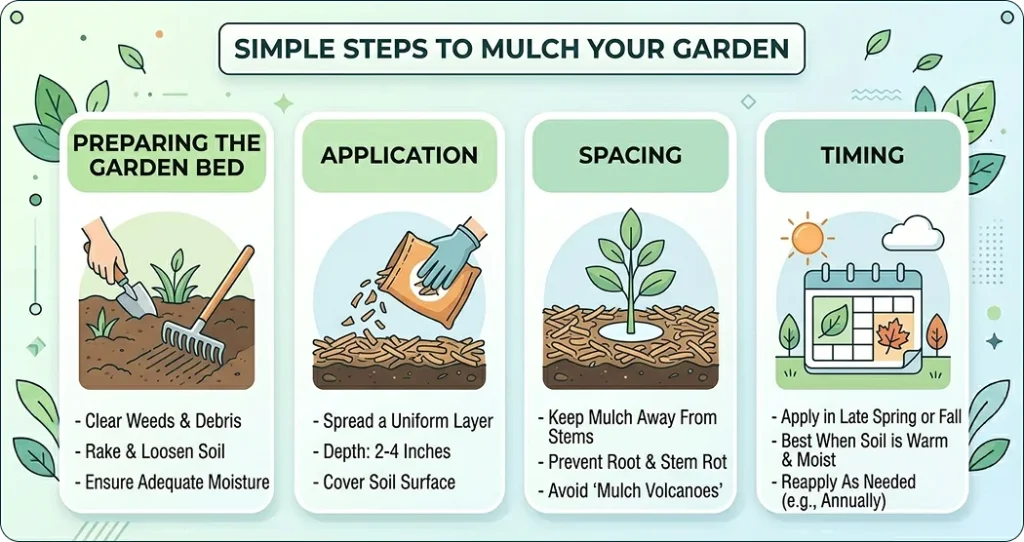
- Preparing the Garden Bed
- Application
- Spacing
- Timing
Benefits of Mulching Your Garden
The following are the benefits of mulching your garden:
- Retain Moisture
- Weed Suppression
- Improves Soil Health
- Temperature Regulation
Let’s discuss each benefit in detail for better understanding.
Preparing the Garden Bed
Before you start adding mulch to your garden, you must prepare your garden bed first. Remove weeds, debris, and level the soil if it’s bumpy. Some gardeners like to mix compost or fertilizer in soil at this stage. In this way, you give your plants a good base before adding mulch on top.
Application
Spread the mulch evenly with a rake or your hands. You don’t have to be perfect; just make sure the soil is covered. Some gardeners like layering mulch in stages, adding more as it breaks down. Others do one thick layer. Both ways work as long as the roots stay comfortable. Do not bury stems or trunks, as it is not favorable for plants.
Spacing
Adding too little mulch doesn’t benefit your lawn, while adding too much can be harmful. For most plants, 2-4 inches of mulch is ideal. A couple of inches is enough to keep soil moist and block weeds without suffocating the roots. Avoid piling mulch right up against tree trunks or plant stems. That can trap moisture against the bark, inviting rot or pests. Keep a small gap, a few inches, so your plants breathe.
Timing
Spring and fall are the main seasons for mulching, but each has different benefits. In Spring mulch helps to conserve moisture and keeps weeds away in the growing season. Fall mulch acts like insulation for plants. It protects roots from cold winter temperatures. Some gardeners do light mulching in summer for heat protection, especially for tender plants.
Conclusion
Mulching keeps soil moist, weeds down, roots safe, and soil healthy. You don’t need fancy tools or expensive materials to mulch your garden. Just adding a few inches of bark, leaves, or straw can make a big difference. In Canada, Harry’s Lawn Care guides people to mulch their lawns in the best ways to make it beneficial for plants in each season.
Your Garden Deserves the Best Care
Contact Harry’s Lawn Care for reliable and affordable mulching services.
Frequently Asked Questions
1.
What is the best type of mulch to put in your garden?
What is the best type of mulch to put in your garden?
Salt Hay is the best type of mulch to put in your garden. You can choose the best mulch according to your garden’s needs.
2.
How to choose the type of mulch?
How to choose the type of mulch?
You can choose the type of mulch based on your garden type. For example staw and hay mulch are best for vegetable gardens.