
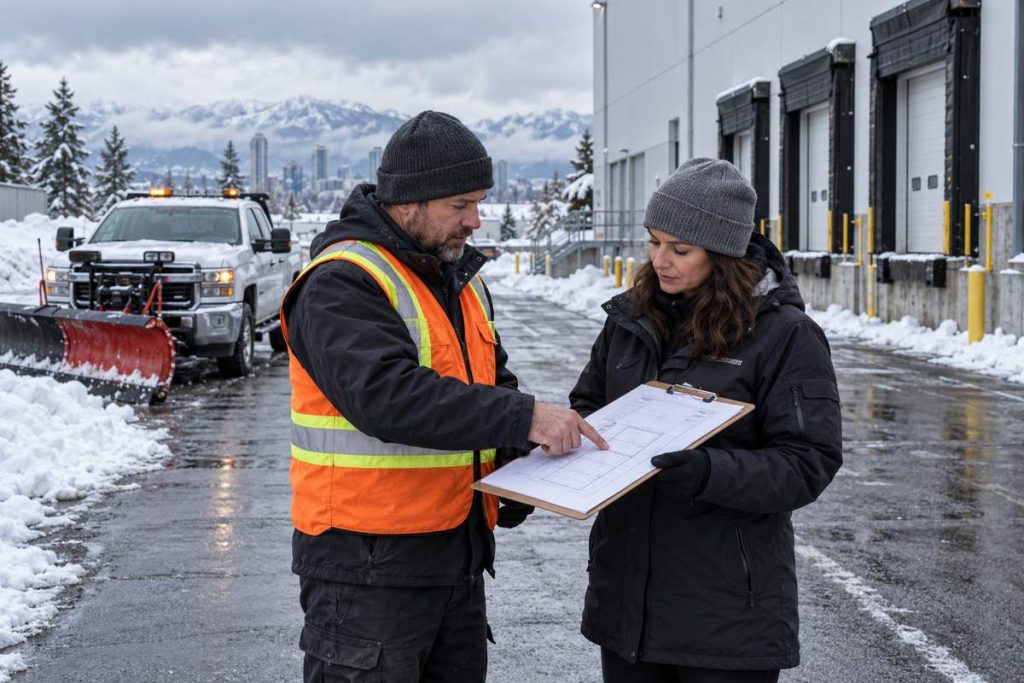
Winters in BC feel mild most years. Then one storm hits, and suddenly your parking lot becomes a hazard. This is why every property owner needs a solid commercial snow removal contract before the first snowfall. A good commercial snow removal contract protects your business, staff, and anyone who walks onto your property. In this blog, you will learn what to include snow removal contracts, from response time to insurance.
What Is a Commercial Snow Removal Contract?
A commercial snow removal contract is a written deal between a property owner and a snow removal company. It spells out what gets cleared, how fast, and who pays for what. Think of it as rules both sides agree to before the first snowfall. A good snow removal contract template commercial property owners use leaves no guesswork. Name the exact areas to be cleared, set a price, and tell what happens if snow keeps falling for two days straight. Without this, you are trusting a stranger's memory, and memory is a poor plan during a storm.
Some owners still use a text message as their agreement. That is not a real commercial snow removal contract, and it will not hold up if something goes wrong. In BC, something can go wrong fast.
Why BC Businesses Can't Skip a Written Snow Removal Agreement
Metro Vancouver winters feel mild most years. Then one week brings ten centimetres overnight, and every lot in town turns into a skating rink. Businesses that are ready keep running while others face challenges. Under BC's Occupiers Liability Act, property owners must take reasonable care to keep their premises safe for anyone who walks in. Ice on your steps is still your problem, even if you hired someone to clear it. A written snow removal agreement BC owners can point to show you took that duty seriously. There is also a city rule most owners forget. Vancouver requires sidewalks cleared by 10 a.m. the next morning, or a fine starting at $250. Any commercial snow removal contract you sign should name this deadline directly.
What Should the Scope of Work Cover?
The commercial snow contract scope is the heart of the whole agreement. A weak commercial snow contract scope causes arguments. A clear one means everyone knows their job before the snow falls.
Parking Lots and Drive Lanes
List every lot, entrance lane, and fire access road by name or a small site map. A property with two lots and one back lane needs all three written down, not just "the lot."
Sidewalks, Entrances, Stairs and Ramps
These get the most foot traffic and the most risk. Say exactly which stairs, ramps, and doors are included, and whether handrails get cleared too.
Loading Docks and Fire Lanes
Delivery trucks and emergency vehicles both need clear access. Miss this part of the contract, and a blocked fire lane becomes a real safety problem fast.
Snow Piling and Off-Site Hauling Rules
Snow has to go somewhere. The commercial snow removal contract should say where piles are allowed, when a pile gets hauled away, plus who pays for that trip.
How Should Response Times and Triggers Be Defined?
This section is where most commercial snow removal contract disputes start. Vague wording here causes more headaches than almost anything else in the whole deal.
Snowfall Trigger Depth
Pick an exact number, such as two inches or five centimetres. Once that much snow falls, the crew gets dispatched. No mentioned depth means no one knows when the clock starts.
Completion Deadline After a Storm
The snow removal response time should be written in hours, not "as soon as possible." Tie it to Vancouver's 10 a.m. rule where it applies, and set a separate number for lots that open early.
24/7 Forecast Monitoring
Ask whether the contractor watches the forecast around the clock, or waits for your call. A strong snow removal service agreement includes proactive monitoring, so crews move before you even notice the snow. Any snow removal service level agreement worth signing should spell this part out in writing.
What Should a De-Icing Clause Cover?
Plowing alone is not enough. Ice forms even after a lot looks clean, especially with the freeze-thaw pattern common across the Lower Mainland. A snow removal contract de-icing clause needs its own space, separate from plowing.
Pre-Treatment and Post-Storm Salting
Clearly mention whether the crew applies brine before a storm, and if salting after plowing sits inside the base price or gets billed extra. This is the core of most snow removal contract de-icing clauses.
Product Restrictions for Sensitive Areas
Some sites have stone entryways, pet areas, or garden beds near walkways. Note any product limits here so the wrong chemical does not damage what you care about.
Temperature-Based Triggers
Black ice can form on a clear night with no new snow at all. The contract should say the crew also treats ice based on the temperature of the pavement, not snowfall alone.
What Documentation Should the Contract Require?
If a slip and fall claim shows up months later, memory will not save you. Paper, photos, and timestamps will.
Service Logs
Require the contractor to log every visit: date, arrival time, and what got done. This becomes your defense if someone later claims the lot was never touched.
Photo and GPS-Timestamped Proof
Photos with a time and location stamp, taken after each visit, are hard to argue with. Ask for these as a normal part of every job, not an extra favor.
Snow Storage Records
Keep a simple note of where snow was piled and when it got hauled. This ties back to the piling rules in your scope of work, closing a gap most owners never think to ask about.
What Insurance Should a Snow Removal Contractor Carry?
Snow removal contract insurance requirements protect you just as much as the contractor. Never take a company's word for coverage. Always ask to see documents directly.
Commercial General Liability (CGL)
Ask for at least two to five million dollars in CGL coverage. This pays out if someone slips and sues after your lot was serviced. Snow removal contract insurance requirements should always sit in the contract as a dollar figure, never as a vague promise of "we're covered." Real snow removal contract insurance requirements protect you, not just the contractor.
Certificate of Insurance Naming You as Additional Insured
A certificate is proof, not just a claim. Ask that your business, or your strata corporation, be named directly on the policy.
WorkSafeBC (WCB) Coverage
Confirm the crew on your property carries WorkSafeBC coverage. If they do not, and a worker gets hurt on your lot, you could end up paying part of the bill yourself.
Conclusion
A commercial snow removal contract is not something to rush through in October. Every piece, from response time to de-icing to insurance, protects your property and the people who walk through your doors. Use this snow plowing contract checklist as your starting point before you sign anything this season. Harry's Lawn Care is BC's leading commercial snow removal company, built on clear contracts, fast response times, and full documentation for every visit. Property owners across the Lower Mainland call Harry's Lawn Care when they need their lot cleared and safe.
Frequently Asked Questions
What happens if a snow removal contractor doesn't show up during a storm?
You could be left with an unsafe lot and no shield if someone gets hurt. This is why response time and trigger depth belong in the contract, not left as a verbal promise.
Can a property owner be sued even if they hired a snow removal company?
Yes. Hiring a contractor does not remove your duty under the Occupiers Liability Act. Owners and contractors can both be named in a claim, which is why documentation and insurance both matter so much.
How do I know if a snow removal company is actually insured?
Ask for a certificate of insurance naming your business as an additional insured, and a current WorkSafeBC clearance letter. A company that hesitates on either one is a warning sign.
What's the difference between a snow removal contract and a landscaping contract?
They are usually separate deals, even with the same company. A landscaping deal covers lawns and gardens. It does not cover plowing, salting, or response times unless snow removal is written in as its own section.
How much notice is needed to cancel a commercial snow removal contract?
This varies, but most agreements need written notice somewhere between fourteen and thirty days. Check the cancellation clause before winter starts, not after a bad storm.