
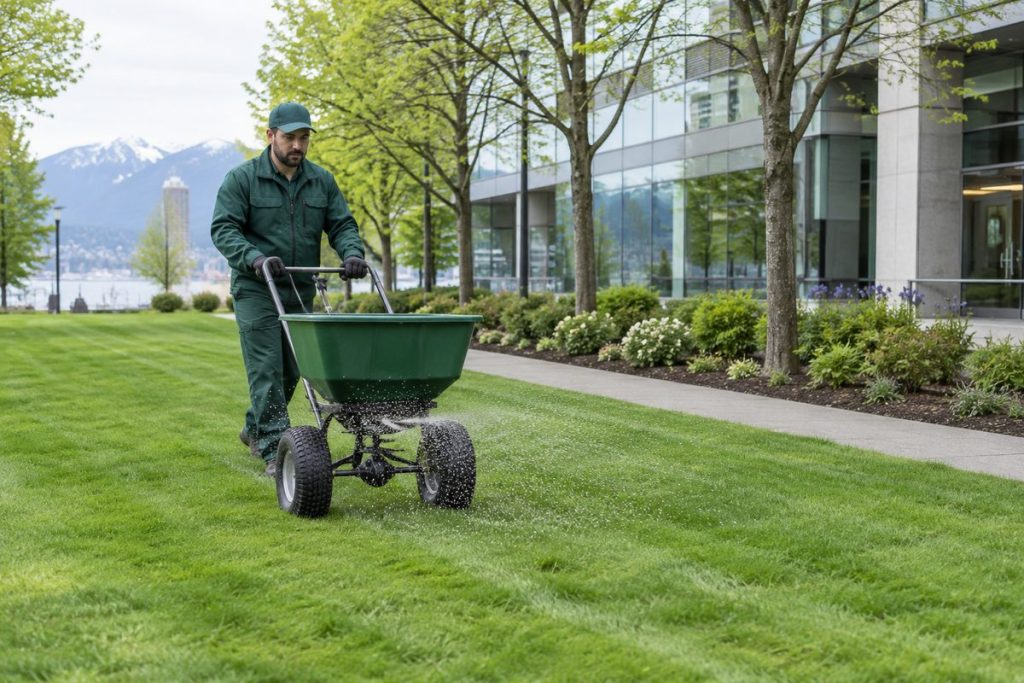
Why does a Vancouver lawn that gets so much rain still look pale, thin, and mossy? Rain is part of the problem. It washes food out of the soil. The soil is also acidic, and that blocks what is left. Good commercial lawn fertilization Vancouver starts with a plan, not a guess. This guide is for councils and managers. It covers timing, local rules, and how to read a contract.
What Is a Commercial Turf Fertilizer Program?
A commercial turf fertilizer program is a written plan for feeding grass all year. It sets dates, products, and amounts. It also includes who checks the work. Commercial lawn fertilization Vancouver should be judged like any building service.
What a year-round plan includes
A year-round lawn fertilizer plan starts with a soil test. Then it lists feeds, lime, core aeration, overseeding, and moss care, each within a month. A lawn fertilization schedule BC that councils can approve must have named months, not just seasons.
How strata, multi-family and office park lawns differ from home lawns
A home lawn has one owner. A strata lawn has many, plus a council and a yearly budget. Office park visitors judge a company by its grass. A commercial lawn care program therefore needs written records and steady results.
Why Does Vancouver’s Climate Change Your Lawn Feeding Schedule?
Mild, wet winters and dry summers shape every feed. Commercial lawn fertilization Vancouver sites need to follow that pattern, so a calendar copied from Ontario or Alberta will miss the mark.
Heavy rain washes nutrients out
Rain falls hard from autumn to spring. Nitrogen dissolves in water and moves past the roots. Small slow-release feeds let grass take food a little at a time.
Acidic soil helps moss grow
Vancouver soil is slightly acidic, with a pH near 5.5. Acid soil blocks fertilizer and helps moss grow. Test first, then add dolomite lime only if needed. Spring and fall are the best for it.
Cool-season grasses peak in spring and fall
Most local lawns use fescue and ryegrass. These grow best in cool, damp weather. Red and creeping fescues cope well with shade, which suits many strata courtyards.
Dry summers and tan grass
July and August are often dry. Cool-season grass slows down and may turn tan. That is normal, and it recovers with the September rain.
What Does a Year-Round Lawn Fertilizer Plan Look Like in BC?
Here is a lawn fertilization schedule BC sites can use as a start. Adjust it after a soil test. It suits most commercial lawn fertilization Vancouver sites. The table is a lawn feeding schedule Vancouver managers can share with a council. It can serve as your year round lawn fertilizer plan.
| Time | Task |
|---|---|
| Late Feb-April | First slow-release feed near 10°C |
| May-June | Second feed; lime or moss care if tested |
| July-August | No heavy nitrogen |
| Early September | Aerate, overseed, root feed |
| October-November | Optional potassium feed; clear leaves |
| December-February | Rest; check drainage |
Early spring (March-April)
Every lawn feeding schedule Vancouver should start with soil temperature, not the calendar. Wait for about 10°C. Early heavy nitrogen makes thin growth and invites moss.
Late spring (May-June)
The City of Vancouver names mid to late May as a feeding time. For lawns that need little maintenance, the City suggests using organic fertilizer no more than twice a year, in May and early September.
Summer pause (July-August)
Skip heavy nitrogen in hot months, since it can burn tired grass. Aim to give the lawn about 25 mm of water once a week, which may take close to an hour. Water in the morning.
Winter rest (December-February)
Do not feed wet, cold soil. Puddles show poor drainage, and that helps moss.
Why Is Fall Lawn Fertilization the Most Important Feeding?
In commercial lawn fertilization Vancouver crews put their best effort here. Roots grow while the air is cool and the soil is still warm.
The early-September root feed
Fall lawn fertilization starts in early September, when rain returns. Aerate first, overseed thin spots, then feed. This timing also matches the City of Vancouver’s recommended fall feeding period.
Late-fall potassium feed
A low-nitrogen, high-potassium feed in October or November can help grass face frost. Late nitrogen only encourages moss, so skip it on shady sites. Clear fallen leaves quickly to prevent snow mould.
How strong roots handle chafer grubs
The European chafer is a lawn pest across Metro Vancouver. Its grubs eat grass roots from about August to May, only 2.5 to 5 cm below the surface. Crows, skunks, and raccoons then dig the lawn up. Strong roots, built by fall lawn fertilization and aeration, help turf survive. The City of Vancouver does not allow chemicals for chafer control and points to nematodes.
Where Do Local Rules Affect Commercial Fertilizer Programs?
Check the bylaws where the property sits before any commercial lawn fertilization Vancouver crew starts work.
Cosmetic-pesticide bylaws and weed-and-feed
Many Metro Vancouver cities limit pesticides used only for looks. Health Canada explains how cosmetic pesticide bans work. In Vancouver, weed-and-feed counts as a pesticide, so it is not allowed for cosmetic use. Richmond lists fines of up to $10,000. A commercial turf fertilizer program here should use fertilizer only.
Water restrictions for strata and commercial sites
Stage 1 water rules run from May 1 to October 15 each year. Commercial and mixed-use properties count as non-residential and have their own rules, as the City of North Vancouver shows. Water each feed in within the allowed window. Stage 2 bans lawn watering entirely, so plan feeds around rain.
How Should Strata and Office Programs Differ?
Commercial lawn fertilization Vancouver looks different on a strata site than on an office site.
Strata lawn fertilization
Strata lawn fertilization answers to a council. It needs a clear budget, set dates, and a short report after each visit. Share the lawn fertilization schedule BC councils approve, with owners early. Common lawns also carry children and pets, so labels and drying times matter.
Fertilization service for businesses
A fertilization service for businesses is judged by looks. Parking strips and entrances pack down under foot traffic, so they need aeration with the feed. A good fertilization service for businesses also works around tenants and events. Harry’s Lawn Care plans each site around its traffic, shade, and grass type.
How Do You Choose a Commercial Fertilization Contract?
A good commercial fertilization contract protects both sides. Read it before the first feed, not after the first complaint. Contracts for commercial lawn fertilization Vancouver often use short phrases, so ask for simple words.
What the scope should list
List the number of feeds, products, and months. Add lime, aeration, and overseeding if they are in the price. A fair commercial fertilization contract promises a free return visit for missed areas.
Application logs and visit reports
Ask for a log of every visit with the date, product, N-P-K numbers, and amount used. Photos help. A council can file these records, and a commercial lawn care program is easier to defend with them.
Vendor checks and contract length
Ask for proof of insurance and WorkSafeBC coverage, plus local references. Check renewal and cancellation terms. A one-year term with a clear exit beats a long lock-in. Do not pick on price alone.
Conclusion
A good year round lawn fertilizer plan is simple. Test the soil, feed in small steps, and put your best feed into fall lawn fertilization in early September. Follow local pesticide and water rules. Choose a commercial fertilization contract that lists every visit, and build a commercial lawn care program you can defend. Harry’s Lawn Care, the No. 1 team for commercial lawn fertilization Vancouver, can help.
How much does commercial lawn fertilization Vancouver cost for a strata or office site?
The price depends on lawn size, visits, and products. Lime and aeration add cost. Ask for a quote that lists each item, and compare line by line.
Is lawn fertilizer safe for residents, kids, and pets on common lawns?
Follow the label. Keep people and pets off until the lawn is watered in or dry. Slow-release products are gentler, and weed-and-feed is not allowed for cosmetic use in Vancouver.
Can we use organic fertilizer on our strata lawn?
Yes. The City of Vancouver recommends organic fertilizers such as composted manure. They work slowly, so results show later. A soil test helps strata lawn fertilization stay on track.
How long until we see fertilization results?
Many lawns green up in one to two weeks if moisture is enough. Root gains take longer, so judge a commercial lawn fertilization Vancouver program over a full year.
Should crews leave clippings on the lawn?
Usually yes. Clippings break down and return nutrients. It is advised not to cut more than a third of the blade.